

What Is a Design Brief Definition and Why Do You Need One
Let's be honest, starting a web project without a proper design brief is like trying to build a house without any blueprints. You might tell the builder you want "three bedrooms and a nice kitchen," but without a clear plan, you're inviting chaos, costly mistakes, and a final product that looks nothing like what you had in mind.
A design brief is your best defence against this kind of digital disaster.
What Exactly Is a Design Brief and Why Should You Care?
At its core, a design brief is the essential communication tool that translates your business goals into a clear, actionable guide for your web design team. It gets you past vague ideas like "I just want a modern-looking website" and forces you to answer the tough questions that will actually shape the project's success.
Think of it as the single source of truth for the entire project. It's not just a bit of paperwork to tick off; it's a strategic document that keeps everyone—from you to the developers—on the same page, focused, and accountable.
Your Blueprint for Project Success
By getting the purpose of the project down on paper from the very beginning, you make sure every design choice and technical feature serves a real business objective. This alignment is absolutely critical if you want to see a genuine return on your investment.
A good brief brings clarity to the most important parts of your project:
- Project Goals: What, specifically, do you need this website to achieve? Is it to increase online quote requests by 30%? Or maybe to boost product sales by 15%? Be specific.
- Target Audience: Who are you actually trying to connect with? What do they need from your site to solve their problems or make a purchase?
- Scope and Deliverables: What pages and features are non-negotiable? It's a good idea to map this out early. You can check out our guide on essential site features to get some ideas.
- Budget and Timeline: What are the real-world financial and time constraints? Being upfront about this prevents major headaches down the track.
To put it simply, we see the design brief as the best insurance policy you can have against project failure.
A design brief turns ambiguity into action. It aligns expectations, clarifies objectives, and provides a clear framework for measuring success.
The effort you put into creating a detailed brief now will pay off tenfold later. In fact, some industry research suggests that a staggering 85-90% of design project failures in the Australian market can be traced back to a vague or poorly written brief. This stat alone shows just how vital this document is for keeping your project on track, on budget, and delivering the results your business needs. You can read more on the impact of project briefs on their success if you're keen to dive deeper.
To help clear things up even further, let's break down what a design brief is—and what it isn't.
Design Brief At a Glance
| What a Design Brief IS | What a Design Brief IS NOT |
|---|---|
| A strategic roadmap that outlines the why, who, and what of the project. | A technical manual filled with code snippets or server specs. |
| A shared agreement on goals, scope, and success metrics. | A wish list of every cool feature you've ever seen, without a business case. |
| A communication tool to align the business owner and the design/development team. | A rigid contract that can't be adjusted. It's a guide, not a set of unbreakable rules. |
| A focusing lens that ensures every decision supports a specific business objective. | A vague set of instructions like "make it look nice" or "give it a modern feel." |
| A foundation for measuring success after the project launches. | The final design itself. It's the plan before the creative work begins. |
Hopefully, this table gives you a much clearer picture. The brief is your starting point—the foundational document that sets the stage for a smooth, successful, and stress-free website build.
Anatomy of a Powerful Web Design Brief
A great web design brief is much more than a simple document; it’s the strategic blueprint that organises your vision into a clear, actionable plan for your web agency.
Think of it like giving a chef a recipe. If you just say "make me a nice dinner," you'll get something, but it probably won't be what you were imagining. But if you provide the ingredients, a step-by-step recipe, and a photo of the final dish? You're far more likely to get exactly what you wanted. The same goes for your website.
By breaking down the project into its core parts, you give the creative team the exact information they need to build a digital solution that doesn't just look good, but actually delivers tangible business results. Each section of the brief builds on the last, creating a comprehensive guide for the whole project.
This flowchart shows how a solid design brief acts as that foundational blueprint, guiding the entire project from concept to a successful launch.
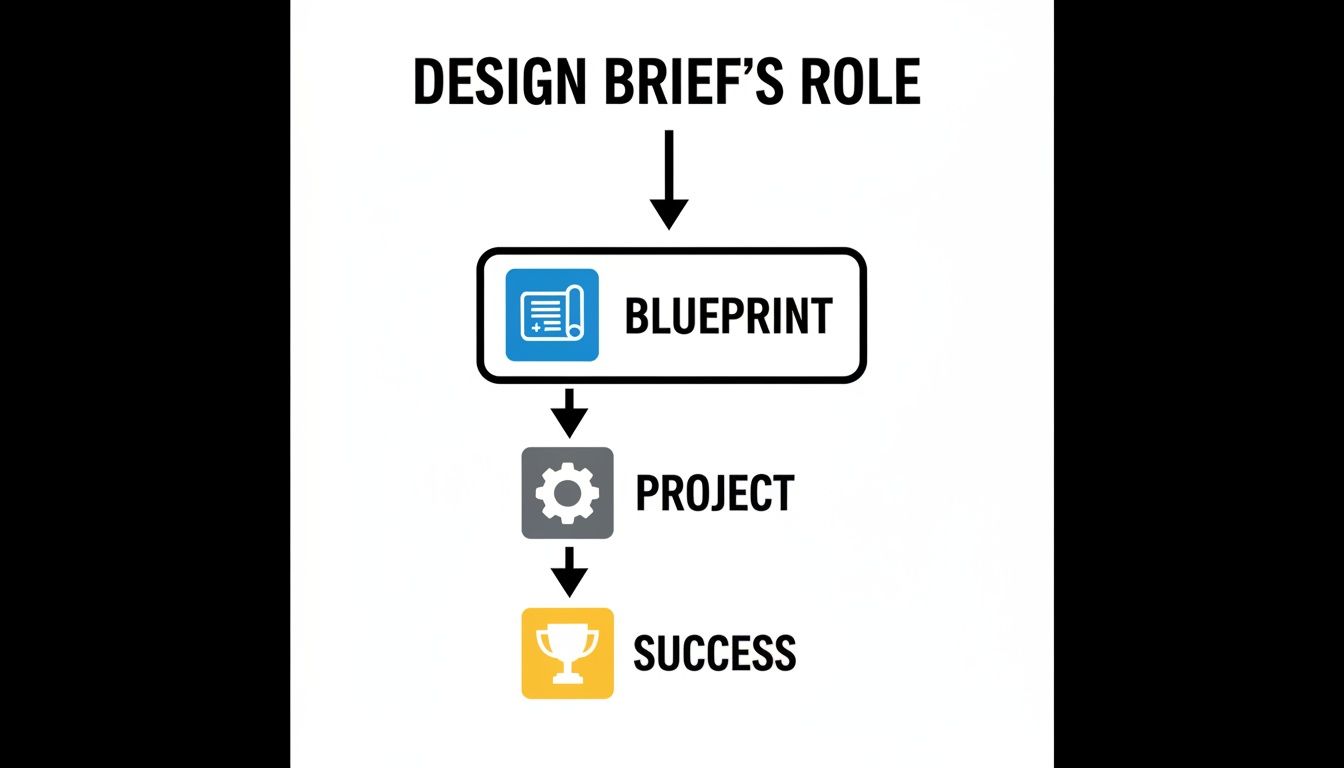
As you can see, the brief is the critical first step. Get this right, and you set the entire project up for success.
Project Objectives and Success Metrics
This is the absolute core of your brief—the "why" behind the project. Vague goals like "we want a better website" are pretty much useless. What you need are specific, measurable objectives that tie directly back to your overall business goals.
Strong objectives give your design team a clear target to aim for and define what success actually looks like.
- Weak Objective: "Increase online engagement."
- Strong Objective: "Increase online quote requests submitted through the website by 25% within six months of launch."
This level of clarity ensures every decision made during the project is purposeful. It also gives you a concrete way to measure the return on your investment once the site goes live.
Target Audience Personas
Let's get one thing straight: you're not designing this website for yourself. You're designing it for your customers. That's why a detailed description of your target audience isn't just nice to have—it's non-negotiable.
Who are they? What problems are they trying to solve? What motivates them to look for a business like yours in the first place?
Don't just list dry demographics. Go a step further and create a persona—a semi-fictional character who represents your ideal customer. Give them a name, a job, and a backstory. This simple exercise helps designers and writers truly empathise with the end-user, leading to a much more intuitive and effective website experience.
Knowing your audience inside and out informs everything, from the visual design and layout to the tone of voice used in the copy. Applying technical writing best practices here can also help make sure your brief is perfectly clear for everyone involved.
Scope and Required Deliverables
Right, this is where you define the "what" of the project. It's time to list out all the pages, features, and functionality the website absolutely must have.
Being explicit here is your best defence against "scope creep"—that sneaky process where small requests get added on, slowly blowing out your timeline and budget.
A clear scope should include:
- Sitemap: A list of all the pages you need (e.g., Home, About Us, Services, Case Studies, Blog, Contact).
- Key Functionality: What does the site actually need to do? This might include an e-commerce shopping cart, a live chat feature, a booking system, or a secure client login area.
- Deliverables: List everything you expect the agency to hand over. This usually includes wireframes, design mockups, and, of course, the final, fully coded website. You can learn more about how different features affect the user experience in our guide on what is responsive web design.
Timeline and Budget Constraints
Every project has to operate in the real world, which means dealing with timelines and budgets. Be upfront and realistic about both from the very beginning.
A clear timeline should have key milestones, like dates for design approval, when you'll supply all the content, and the target launch date.
Likewise, being transparent about your budget allows an agency to propose a solution that actually fits what you can afford. It builds trust and avoids awkward conversations and surprise costs down the track. Pro tip: providing a budget range (e.g., "$10,000 – $15,000") is often more helpful than a single, rigid figure.
How to Write a Brief That Delivers Results
Knowing what goes into a design brief is one thing. Actually writing one that gets your creative team fired up and delivers real, tangible results is another beast entirely. To get from theory to action, you need to start with some crucial internal detective work. This is where you gather all the raw materials needed to build a brief that truly hits the mark.
Think of yourself as an investigative journalist for your own business. Your mission is to uncover the core truths about the project before a single line of code is written or a pixel is designed. The quality of your brief will be a direct reflection of the quality of the questions you ask your team.
Start with Stakeholder Interviews
Before you even think about writing, get your key people in a room. We're talking about the CEO, the marketing manager, the head of sales—anyone whose success is tied to this project. The goal here is simple: get everyone on the same page about the big-picture vision.
You need to ask powerful, open-ended questions that get beneath the surface. Ditch the simple stuff like, "What pages do you want?" and start digging into the real business drivers behind the request.
Here are a few questions to get the conversation started:
- What does a massive win for this project look like in 12 months?
- If this new website could solve only one problem for our customers, what would it be?
- What are our competitors doing online that makes you say, "I wish we did that"?
- What's the number one action we want a visitor to take on any given page?
- How will we measure success beyond just looking at website traffic?
These sorts of questions force everyone to think strategically. This ensures your brief is built on a solid foundation of business goals, not just personal taste or aesthetic preferences.
Articulate Your Unique Value Proposition
Once you've got a handle on the internal goals, it's time to nail down how you talk about your value to the outside world. A clear unique value proposition (UVP) is the absolute heart of your messaging. It’s a short, sharp statement that answers three crucial questions for your customers:
- How does your product or service fix their specific problem?
- What real benefits can they expect to get?
- Why should they choose you over all the other options out there?
A strong UVP is like a compass for the design team. It ensures that every piece of copy, every image, and the entire user journey consistently screams why your business is the best possible choice.
Conduct Competitor Research
Next up, you need to understand the neighbourhood your new website will be living in. Pinpoint three to five of your main competitors and do a deep dive into their online presence. Don't just glance at their homepage; click through their site, analyse their messaging, and see what they're asking users to do.
Jot down what they do well and, more importantly, where their experience falls flat. This isn't about copying what they do. It's about spotting the gaps and finding opportunities to differentiate your business and offer a far superior online experience for your customers.
To help put these ideas into action, we’ve put together a downloadable design brief template. It includes all the sections we've discussed and gives you a practical starting point for anyone looking to learn how to build a website from scratch.
Bringing Your Design Brief to Life With an Example
Theory is all well and good, but nothing really clicks until you see it in action. To properly get your head around a design brief, let's switch from talking about abstract parts to a real-world case study. We'll invent a fictional Aussie business and break down how their needs get translated into a clear, actionable plan for a web design agency.
Let’s imagine “Brisbane Eco Cleaners,” a local, environmentally-friendly cleaning service. They've been growing nicely through word-of-mouth, but their old website is really letting the side down. Their goal is pretty vague: they just want to “get more business from the website.” A well-structured brief will sharpen that wishy-washy goal into a proper strategy.
This isn't a new concept, by the way. For web design agencies here in Brisbane and right across Australia, using formal design briefs has become standard practice as our digital economy has grown. In fact, 78% of Australian SMEs now ask for a written design brief before kicking off a website project because they know it's the key to getting clear results.
A Sample Project Objective
Instead of that fuzzy goal, Brisbane Eco Cleaners needs to define a sharp, measurable objective. This gives the design team a clear target to aim for.
Project Objective: To increase the number of qualified online quote requests from new residential customers by 30% within six months of the new website launching. Success will be measured via form submissions on the 'Get a Quote' page, tracked through Google Analytics.
That one sentence is incredibly powerful. It tells the designers that the single most important thing a visitor can do is request a quote. The entire design should now be laser-focused on guiding people towards that action.
Annotating Key Brief Sections
Let’s pull apart a few more key sections of their brief to see why these specifics matter so much.
Target Audience: "Busy, dual-income families in inner-city Brisbane suburbs (e.g., New Farm, Paddington). They are time-poor, value convenience, and are willing to pay a premium for eco-friendly, non-toxic cleaning products. They research services on their mobile phones after work hours."
- What this tells the designer: Right away, this shapes the design. The site has to be mobile-first, dead easy to navigate quickly, and needs to shout about trust signals like eco-certifications and glowing reviews.
Project Scope: "A 5-page responsive website (Home, About, Services, FAQ, Get a Quote). The 'Get a Quote' form must be simple, with no more than five fields, to maximise conversions on mobile devices."
- What this tells the designer: This sets clear boundaries. The agency knows exactly what they need to build, and that focus on a super-simple form directly supports the main goal of getting more quotes.
Competitors: "Company X has a great booking system but their site feels corporate and cold. Company Y has a friendly vibe but their pricing is unclear."
- What this tells the designer: This is pure strategic gold. The new website can beat the competition by combining a smooth, easy quote process with a warm, trustworthy design and crystal-clear pricing.
This practical approach shows the direct line between a solid brief and a successful website. To get a better feel for how these sections come together, checking out a template like a Design Project Brief Form can be a massive help.
Common Mistakes to Avoid When Creating Your Brief
Crafting a great design brief isn’t just about what you put in; it's also about what you leave out. It’s tempting to rush through this step to get to the "fun" creative part, but dodging a few common traps now can save you a world of pain later. Think of it as your pre-flight check – a few minutes of diligence that prevents costly revisions, blown deadlines, and a final website that just doesn't deliver.

Knowing what these tripwires look like is half the battle. These little errors can have massive consequences, quickly turning your clear roadmap into a confusing mess for everyone involved.
Being Too Vague or Subjective
This is easily the most common pitfall we see. Filling your brief with fuzzy, subjective language like "make it look modern" or "give it a clean feel" is a recipe for disappointment. These words mean completely different things to different people.
This kind of vagueness forces your creative team to guess what you’re thinking, and that’s a gamble you’ll probably lose.
- The Mistake: "We want the website to have a professional and trustworthy vibe."
- The Solution: "We want to build trust by featuring client testimonials on the homepage, showcasing our industry certifications in the footer, and using a colour palette of deep blues and greys, similar to our successful competitors X and Y."
See the difference? You're moving from a feeling to a set of clear, actionable instructions. That’s the mark of a great brief.
Letting Personal Taste Override User Needs
It’s so easy to fall into the trap of designing a website that you love. The hard truth? You are not your customer. Your personal preference for certain colours, fonts, or layouts is completely irrelevant if it doesn’t resonate with your target audience or help them achieve their goals.
Every single decision in your design brief should be filtered through one simple question: "Will this help our target customer achieve their goal?" If the answer is no, it doesn’t belong in the brief.
Stick to what your customer data and audience personas are telling you, not what your cousin reckons looks good. The goal is to build a website that works for your customers, not one that just makes the internal team happy.
Setting Unrealistic Expectations
An enormous scope paired with a tiny budget and a breakneck timeline is a project doomed from the start. Expecting a complex e-commerce platform with custom integrations to be built for a few thousand dollars in two weeks just isn't grounded in reality.
This kind of mismatch creates immediate tension and guarantees that something has to give – either quality, time, or budget.
The best way to avoid this is to be completely upfront about your constraints from day one. A good agency can help you prioritise features, maybe suggesting a phased approach where you launch a Minimum Viable Product (MVP) first and add the "nice-to-have" features down the track. This is where having a clear design brief definition really helps set those realistic boundaries for everyone.
Frequently Asked Questions About Design Briefs
Even after getting the hang of what a design brief is, a few practical questions always seem to pop up. Sorting these out will give you the confidence you need to kick things off and make sure you and your design agency are on the same page from day one. Here are the answers to the questions we hear most often from Australian business owners.
How Long Should a Website Design Brief Be?
There's no magic number here, but a solid, useful brief usually lands somewhere between 5-15 pages. The real goal is to be thorough, not just long. A simple brochure-style website might only need a few really detailed pages, whereas a complex e-commerce platform with lots of moving parts will naturally require a much bigger document.
The focus should always be on clarity and covering all the essential components, not hitting a specific page count. If a brief feels too short, it's often a red flag that key questions haven't been answered, which almost always leads to headaches down the track.
A brief’s value is in its clarity, not its length. A concise 5-page document that answers all the critical questions is far more effective than a vague 20-page one.
Getting the design brief definition right is all about providing just enough detail for your creative team to get started without any guesswork.
Who Is Responsible for Writing the Design Brief?
Ultimately, the core business insights have to come from you, the client. But writing the brief itself should be a team effort. You know your business, your customers, and your goals inside and out. A good design agency acts as a strategic partner, helping you pull that knowledge out and shape it into a clear plan.
They’ll often use workshops, questionnaires, and interviews to dig into the details. Their expertise is in structuring your knowledge into an actionable document for their creative team, making sure nothing important gets missed. That partnership is absolutely key to a great outcome.
What if We Don’t Have All the Answers Yet?
That's completely fine! In fact, it's pretty normal. It’s rare for any business to have every single detail buttoned up before a project kicks off. If you're a bit fuzzy on certain things, like specific technical requirements or the finer points of your audience segments, just be upfront about it.
You can frame these areas in your brief as "key questions to resolve" or "areas needing expert guidance." This is actually helpful, as it shows your design partner exactly where they can add the most value. It turns the brief from a rigid set of instructions into the starting point for a really productive conversation.
Ready to turn your vision into a high-performing website with a team that gets your goals? At Website Builder Australia, we partner with businesses like yours to create clear, effective design briefs that lead to exceptional results. Get in touch with us today to start the conversation.


