

Guide: Hire Digital Marketing Consultants for SMBs
You're probably here because your business is doing fine offline, but online it feels messy. A Brisbane plumber, electrician, retailer, or professional service owner can be brilliant at the actual work and still feel buried by Google Ads, SEO, GA4, social content, email rules, landing pages, and whatever Google changed this month.
That's normal. Most SMB owners don't need to become marketers. They need a reliable person or team who can turn digital activity into enquiries, sales, and clearer reporting.
Your Guide to Finding the Right Digital Marketing Partner
A lot of small business owners hit the same wall. They've got a decent website. They may have boosted a few Facebook posts, run a Google Ads campaign, or paid someone to “do SEO”. Yet the phone doesn't ring consistently, leads are patchy, and reporting is either confusing or non-existent.
That's where digital marketing consultants can make a real difference. Not as button-pushers, but as strategic partners who connect the dots between your offer, your website, your ad spend, and the way customers search in Australia.

The market is big, and it's getting more competitive. Digital advertising spend in Australia reached AUD 14.4 billion in 2024, up 12% year on year, with 72% allocated to search and social according to this IAB Australia summary. That matters because those are the exact channels where poor setup wastes money quickly, and where good strategy compounds.
For a local trade business, that might mean tightening suburb targeting, fixing weak service pages, and making sure enquiries are tracked properly. For an eCommerce store, it might mean cleaning up product feed issues, aligning ads to margin, and improving the product page before increasing spend. If you want a better sense of what happens after the click, Otter A/B's CRO service guide is worth reading because conversion problems often sit on the website side, not just in the campaign itself.
A consultant earns their fee when they stop you doing the wrong things faster.
The hiring process matters because the wrong consultant can keep you busy without making you profitable. The right one helps you prioritise, measure properly, and avoid expensive mistakes. In Australia, that also means understanding local compliance, local search behaviour, and the practical realities of small business budgets.
First Steps Before You Start Your Search
Don't start with “Who's the best consultant?” Start with “What does the business need most over the next year?” That answer changes everything.
A consultant for a Brisbane roofing company should not approach the job the same way as someone helping an online skincare brand. One needs qualified local leads and fast follow-up. The other may need stronger product pages, shopping ads, email flows, and cart recovery.
Define the business objective first
Write down your primary goal in plain language. Keep it commercial, not vague.
Ask yourself:
- More leads or better leads: Do you need more enquiries, or fewer junk enquiries from the wrong suburbs and service types?
- Sales volume or margin: Are you trying to grow revenue, or protect margin while scaling carefully?
- Short-term demand or long-term visibility: Do you need work booked in over the next few weeks, or are you building a stronger pipeline over the next several months?
- One channel or a full system: Are you mainly fixing Google Ads, or do you need someone to align ads, SEO, landing pages, and reporting?
If your answer is “I want more exposure”, keep going until it becomes measurable. Exposure alone doesn't pay wages.
Match the service to the goal
Different services solve different problems. Many owners lose money at this stage.
SEO suits businesses that need stronger long-term visibility, especially for location-based services and non-branded search demand. It usually involves technical fixes, content, internal linking, and Google Business Profile work.
Google Ads fits businesses that need demand sooner and can handle lead flow operationally. It's useful when search intent is already there and speed matters.
Content marketing helps when buyers need education before they contact you. It's common in professional services, higher-consideration purchases, and niche B2B offers.
Social media management is useful when trust, consistency, and brand familiarity influence the sale. It rarely works well as a standalone lead strategy for every business.
Practical rule: If the consultant can't explain why a channel fits your business model, they're probably selling their favourite service, not solving your problem.
Choose a pricing structure that matches the work
Some work is ongoing. Some isn't. That should shape the fee model.
| Model | Best For | Typical AU Price Range | Pros | Cons |
|---|---|---|---|---|
| Retainer | Ongoing SEO, PPC, content, monthly optimisation | Varies by scope and channel mix | Consistent support, regular reporting, continuous improvement | Easy to overpay if scope is vague |
| Project-based | Website audits, setup work, tracking fixes, launch campaigns | Varies by project complexity | Clear start and finish, easier to budget | Can stall after delivery if no ongoing support |
| Hourly | Advisory sessions, second opinions, troubleshooting | Varies by seniority and expertise | Flexible, useful for targeted help | Can become reactive instead of strategic |
When you compare quotes, don't compare price alone. Compare scope, ownership, response times, reporting depth, and whether implementation is included. A cheaper consultant who leaves all the technical work to you isn't cheaper in practice.
Finding and Shortlisting Top Australian Consultants
This part is less about finding names and more about filtering out noise. Plenty of digital marketing consultants sound capable on a website. Fewer can explain what they'd do for your business, why they'd do it, and how they'd measure whether it worked.
The upside is meaningful. Australian businesses engaging consultants saw a 35% average increase in conversion rates from 2023 to 2025, compared with 14% for in-house teams, particularly in eCommerce, according to this Statista summary. But that doesn't mean every consultant is equal. It means careful selection matters.
Where to look
Start locally, then widen the net if needed.
- Google search with buyer-intent terms: Search phrases tied to the service you need, such as Brisbane SEO consultant, Google Ads consultant for trades, or eCommerce PPC consultant Australia.
- LinkedIn: Look at how consultants explain their work. Clear thinking usually shows up before the sales call.
- Local business networks: Chambers, industry groups, and referral circles often surface consultants who understand local service businesses.
- Professional referrals: Ask your accountant, web developer, or business coach who they've seen deliver solid work.
- Specialist provider pages: If SEO is a key need, review examples like outsourced SEO services for Australian businesses to understand what a defined service scope should look like.
What to check on their website
A decent consultant website should answer practical questions quickly. If it doesn't, be careful.
Look for:
- Service clarity: Can you tell what they do, what they don't do, and who they work best with?
- Evidence of process: Do they describe audits, tracking, testing, reporting, and optimisation, or just promise “growth”?
- Industry relevance: Have they worked with businesses like yours, even if not your exact niche?
- Real language: Do they speak plainly about leads, sales, CPL, ROAS, and website issues, or hide behind jargon?
How to read case studies without getting fooled
Case studies can help, but they're often where fluff sneaks in.
A credible case study usually includes the starting problem, the work completed, the channels involved, the business goal, and what changed operationally. It doesn't need to reveal every number to be useful. It does need to sound like a real business problem was solved.
Be cautious if you see:
- Guaranteed language: “We always get page one rankings.”
- No timeframe: Results are meaningless without context.
- No mention of tracking: If they don't discuss measurement, they may be guessing.
- Only vanity wins: More impressions and clicks are not enough on their own.
If every testimonial sounds polished but none of the work is explained, treat that as marketing, not proof.
Interview Questions That Reveal True Expertise
Once you've got a shortlist, the interview does the heavy lifting. In this setting, good digital marketing consultants stand out from smooth talkers.
A strong operator usually answers with specifics, trade-offs, and a bit of restraint. A weak one often leans on buzzwords, certainty, and generic confidence.
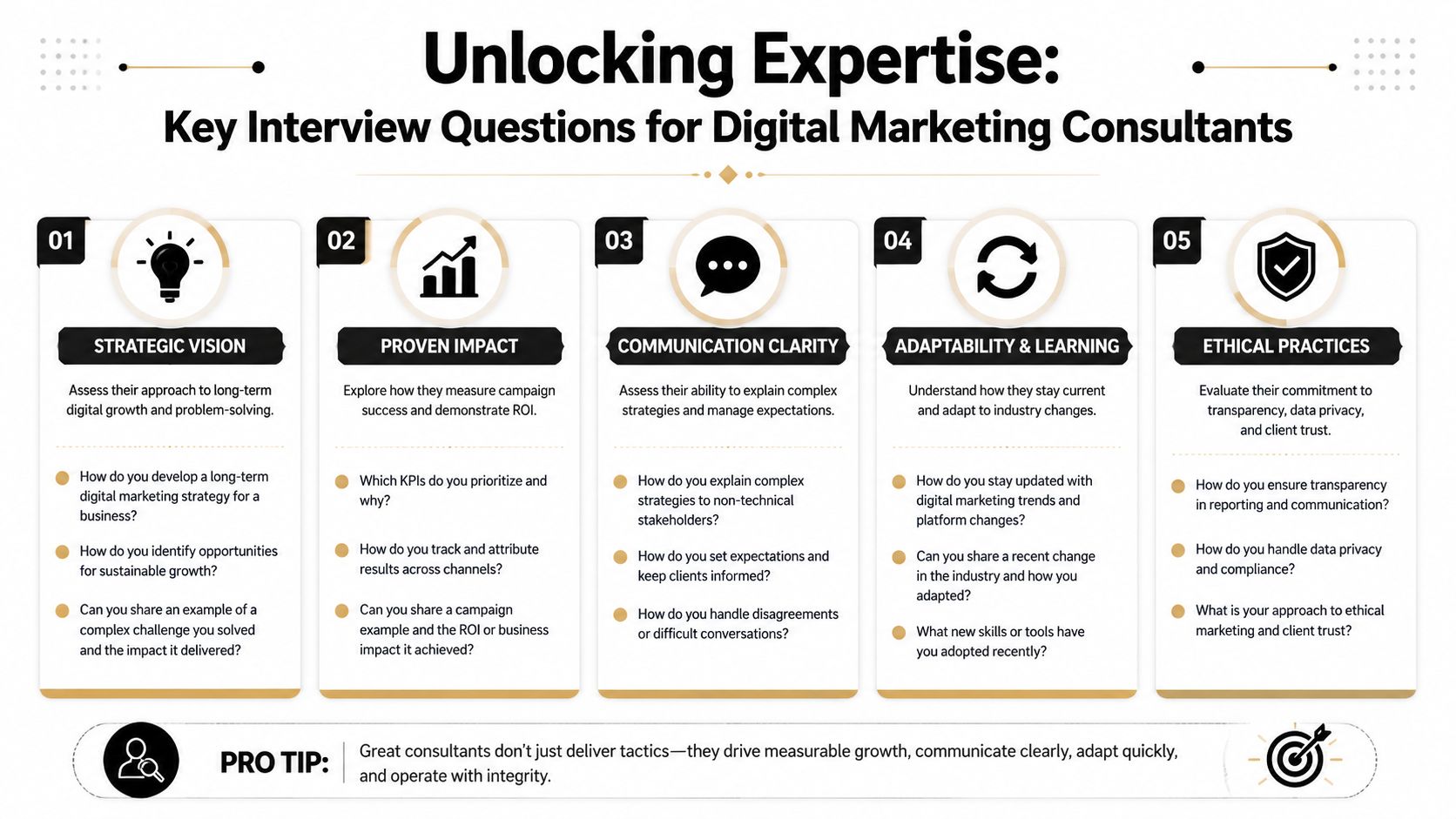
One area is essential. In Australia, 68% of small businesses reported confusion over digital marketing compliance in a 2025 Deloitte survey, with ACCC fines averaging AUD 50,000 per violation, as summarised in this compliance-focused article. If a consultant doesn't understand the Spam Act, advertising representations, consent, and basic disclosure issues, that's a business risk, not a minor gap.
Ask about failure, not just wins
Question: Tell me about a campaign that underperformed. What did you change?
Green flag answer: They explain the original assumption, what broke, how they diagnosed it, and what they changed in targeting, offer, landing page, or tracking.
Red flag answer: They say they rarely have failures, blame the client immediately, or dodge specifics.
Question: How do you decide whether the problem is traffic, offer, or conversion?
Green flag answer: They talk about search intent, landing page fit, enquiry quality, call handling, and data integrity.
Red flag answer: They jump straight to “we'll increase traffic”.
Ask how they report value
Question: What will your monthly report show me that helps me make a business decision?
Green flag answer: They mention qualified leads, cost per lead, sales quality, call outcomes, channel trends, and next actions.
Red flag answer: They focus on likes, impressions, broad traffic, or ranking screenshots without business context.
If you're specifically hiring for paid search, review how a specialist frames campaign structure, commercial intent, and conversion tracking. A useful benchmark is seeing how a provider explains a Google Ads specialist service for Australian businesses. You're looking for strategic clarity, not just platform familiarity.
Test their compliance awareness
Question: How do you handle the Spam Act and ACCC advertising requirements in campaigns?
Green flag answer: They speak about consent, unsubscribe handling, offer claims, testimonials, pricing language, and platform-specific ad review.
Red flag answer: They wave it away with “that's more of a legal issue” or “everyone does it”.
Never hire a consultant who guarantees number one rankings or “instant” lead volume from day one.
If they don't ask about your sales process, close rate, and margins, they're not thinking far enough downstream.
Crafting a Clear Contract and Setting Success Metrics
A good working relationship gets much easier when the contract is boring. Boring is good here. It means everyone knows the scope, deliverables, payment terms, access rules, and exit process.
Problems usually start when the agreement is loose and the reporting is softer than the pitch.

Contract terms worth locking down
Before signing, make sure the agreement covers these points clearly:
- Scope of work: List the channels, tasks, and exclusions. If landing pages, copy, design, tracking, or email automation aren't included, state that.
- Deliverables: Define what you receive each month. That might be campaign management, technical fixes, content briefs, reports, and strategy calls.
- Access and ownership: Confirm who owns ad accounts, analytics, creative assets, and data.
- Approval process: Spell out who approves ads, budgets, and website changes.
- Fees and ad spend: Separate management fees from media budget so there's no confusion.
- Termination terms: Include notice periods, handover expectations, and what happens to accounts on exit.
Pick KPIs that reflect how you make money
Most SMBs don't need more metrics. They need fewer, better ones.
If you run a plumbing business, your core KPI probably isn't clicks. It's cost per qualified lead, supported by call quality and booking rate. If you run an online store, you're more likely to care about return on ad spend, conversion rate, and revenue by channel.
Google Ads in Australia can yield a 250% ROI when campaigns are well run, and top consultants using a Target ROAS of 300 to 400% for eCommerce can achieve CTRs of 5 to 8%, above the national average of 3.2%, according to this PPC benchmark summary. Those numbers are useful only if your setup is built around a clear commercial target.
Match metrics to the business type
Consider this practical perspective:
- Local services: Track qualified leads, booked jobs, lead source, and suburb fit.
- eCommerce: Track ROAS, conversion rate, product-level performance, and margin-sensitive spend decisions.
- Professional services: Track enquiry quality, consultation bookings, and time-to-close.
- Multi-channel businesses: Track first touch and last touch trends, then compare with actual sales outcomes.
A report should help you decide what to do next. If it only tells you what already happened, it's incomplete.
Onboarding and Managing Your Consultant for Growth
Once the paperwork is done, the quality of the onboarding often decides how quickly things settle into productive work. Even strong digital marketing consultants struggle when access is delayed, offers are unclear, or nobody internally owns approvals.
This is the point where many SMB owners either over-manage or disappear. Neither works. The best setup is collaborative, organised, and commercial.
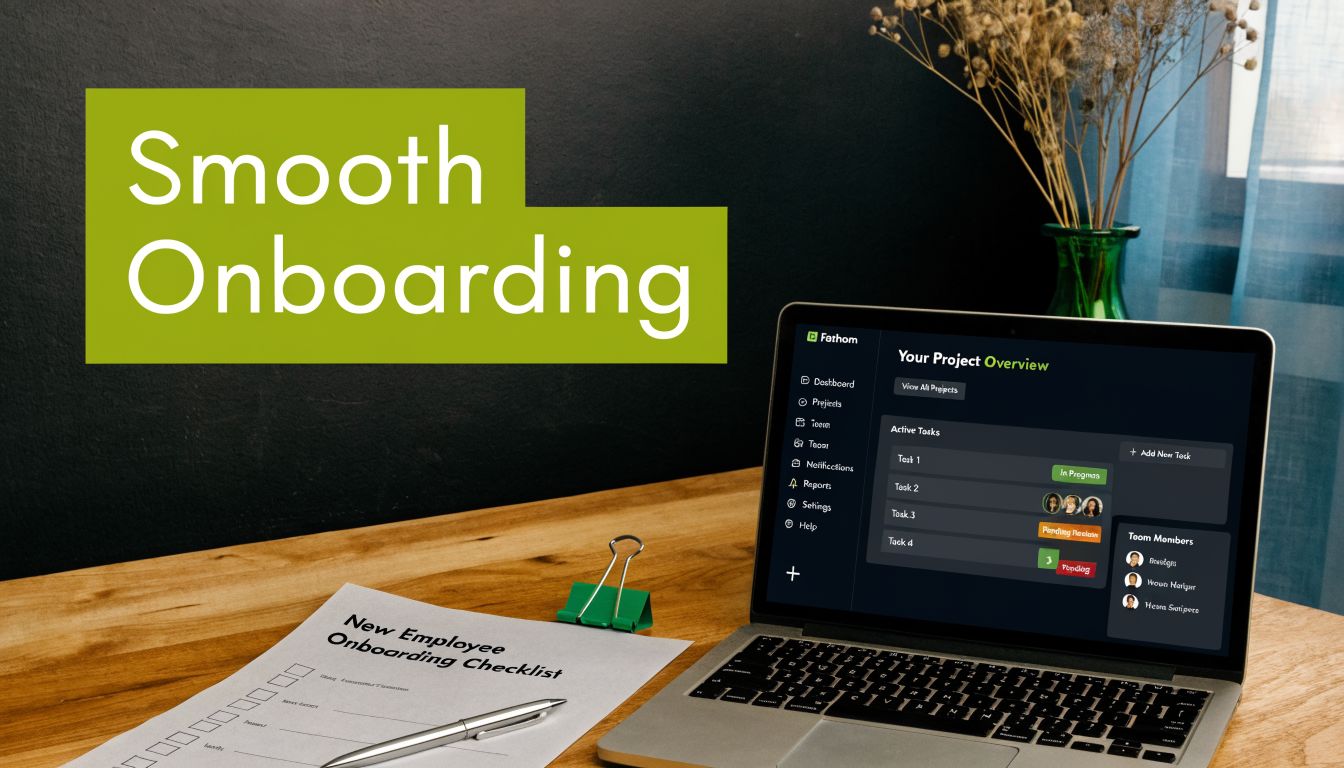
Give them what they need early
A proper onboarding pack saves weeks of avoidable back-and-forth.
Include:
- Account access: Google Ads, GA4, Search Console, Meta, email platforms, CRM, and website CMS.
- Business context: Your best services, highest-margin work, target suburbs or states, common objections, and seasonal factors.
- Sales reality: What counts as a qualified lead, who answers calls, response times, and which jobs you want more of.
- Brand guardrails: Tone of voice, approved claims, imagery, logos, and any legal or compliance restrictions.
If your consultant is also handling content or social, your internal approval process needs to be clean. For teams juggling posting workflows, asset approvals, and multiple platforms, this guide for social media teams is a practical reference. It helps clarify who reviews what and when, which stops social work becoming a bottleneck.
Build a reporting rhythm you'll actually use
A 2025 Sensis Social Media Report found that 72% of Australian regional SMBs struggle to quantify marketing ROI, and 55% abandon consultants because the value isn't clear, according to this summary of the reporting problem. Good consultants close that gap by tying activity to business outcomes, not dashboard clutter.
A workable rhythm usually includes a short monthly review and a deeper quarterly strategy discussion. The monthly review should cover what changed, what mattered, what didn't, and what gets adjusted next. The quarterly meeting should look at broader trends, offer changes, landing pages, and whether channel mix still makes sense.
If social reporting is part of the engagement, compare your process with examples from these social media management tools used by Australian businesses. Not because the tool solves everything, but because clean reporting depends on organised systems.
The best client-consultant relationships don't run on constant meetings. They run on clear inputs, fast decisions, and honest reporting.
Your Digital Marketing Questions Answered
Should I hire a freelancer, consultant, or agency
Pick based on complexity, not ego. A solo consultant or small specialist setup often suits SMBs that want direct communication, tighter accountability, and practical advice. A broader agency can make sense if you need design, development, paid media, SEO, content, and CRM support under one roof. Ask who will do the work, not just who sells it.
How much should I budget to get started
Start with the amount you can sustain long enough to gather useful data and act on it. Too many businesses underfund the first few months, then judge the channel before the setup is even stable. Your total budget should cover both execution and the actual media spend or implementation work. Cheap management on top of a weak website usually isn't a bargain.
How long before I see results
Paid media can produce signals faster than SEO, but speed doesn't equal profitability. Early results often reveal tracking gaps, weak offers, or landing page issues. SEO usually takes longer because technical work, content, and authority don't move overnight. Judge progress against the right milestone for the channel.
What if I already have an internal marketing person
That can work well. A consultant can bring specialist depth, an external perspective, and channel expertise your in-house person doesn't have. The key is role clarity. Decide who owns strategy, who handles implementation, and who reports on performance.
What's the biggest hiring mistake SMBs make
Choosing on personality alone. You do want someone easy to work with, but that's not enough. The better test is whether they can explain trade-offs, understand your commercial reality, and show how they'll measure success without hiding behind jargon.
If you want a Brisbane-based team that can handle the website, tracking, SEO, Google Ads, and ongoing support in one place, Website Builder Australia is worth a look. They work with Australian businesses that need practical digital support tied to real business goals, not vague marketing activity.


