

A Business Owner’s Guide To Website Design Services Australia
Website design services in Australia are all about giving businesses a professionally crafted online presence, whether that's a simple informational site or a full-blown e-commerce powerhouse. The typical services on offer usually cover custom design, development on platforms like WordPress, search engine optimisation (SEO), and ongoing maintenance to keep everything secure and running smoothly. For any business wanting to connect with Australia's massive online consumer base, this kind of investment is absolutely crucial.
Why Professional Web Design Is No Longer Optional

In the Aussie market, your website isn't just a digital brochure anymore. Think of it as your hardest-working salesperson, your flagship store, and the very first handshake you have with a potential customer—all rolled into one. A clunky, slow, or dated site is the online equivalent of a shopfront with peeling paint and a busted door. It doesn't just sit there; it actively pushes people away before they've even had a chance to see what you offer.
This creates a huge "digital divide." Aussie consumers are now used to the slick, fast, and easy-to-use websites of major brands. When a small or medium business offers up anything less, the difference is jarring and your credibility takes an instant hit.
Bridging the Expectation Gap
This is where professional website design services in Australia come in. It’s the most direct way to close that gap and turn your online presence from a potential weak spot into one of your biggest assets.
A professionally built website is engineered from the ground up to hit specific goals, whether that's bringing in new leads, selling products, or establishing you as an authority in your field. It’s all about creating a smooth journey that guides visitors exactly where you want them to go.
A great website builds trust at every click. It communicates competence, reliability, and a commitment to customer experience, often becoming the deciding factor for a customer choosing you over a competitor.
The Foundation for Digital Growth
Looks aside, a professional website is the bedrock for everything else you do in digital marketing. For any business in Australia, a proper website is the foundation for online success, and a solid small business SEO strategy is the only way to make sure it actually gets seen. Without a well-structured site, any money you pour into ads or content is like building a house on sand.
Here are a few things the pros always nail:
- Mobile Responsiveness: A flawless experience on any device is a must, especially since most of your traffic is likely coming from smartphones.
- Speed and Performance: Every millisecond counts. Pros optimise loading times because even a one-second delay can cause conversion rates to plummet.
- User Experience (UX): This is all about intuitive navigation and clean layouts that make it dead simple for people to find what they're looking for.
- Security: Good design includes rock-solid measures to protect your business and your customers' data from online threats.
At the end of the day, skipping out on professional web design isn't saving money; it's a massive missed opportunity. It means leaving a huge chunk of the market untouched and letting your competitors with a better online game snap up all the business.
Decoding The Services Offered By Web Design Agencies
Trying to figure out website design services in Australia can feel a bit like reading a menu in a language you don't speak. You'll hear terms like 'CMS', 'UX/UI', 'hosting', and 'e-commerce integration' thrown around, and it's easy to feel a little lost.
The good news? All these technical-sounding services are just tools designed to solve real-world business problems. Think of a web design agency as the master builder for your digital presence. They don’t just supply the materials; they draw up the architectural plans, handle the interior design, sort out the plumbing, and even stick around for security and maintenance.
Let's break down the main items you'll find on their 'menu'.
Custom Web Design and Development
This is the flagship service, the equivalent of getting a suit perfectly tailored just for you. A custom website is designed and built from the ground up, ensuring every pixel, every function, and every click is crafted exclusively for your brand and your specific business goals.
It's about so much more than just looking good. A proper custom build takes into account who your customers are, how you make a sale, and the exact journey you want people to take. This approach gives you a unique digital asset that makes you stand out from competitors using off-the-shelf templates.
- User Interface (UI) Design: This is all the visual stuff—the colours, the fonts, the images. It’s what makes your site look great and reflect your brand's personality.
- User Experience (UX) Design: This is the invisible architecture that makes the site feel effortless and intuitive. Great UX means your visitors find what they need without any frustration, which naturally leads to them sticking around longer and taking action.
WordPress Development: The Versatile Engine
You’ll almost always see 'WordPress Development' listed as a core service. WordPress is a Content Management System (CMS), which is basically the user-friendly dashboard that lets you update your own website without needing to be a coding whiz.
There's a reason it powers a massive chunk of the internet. Its incredible flexibility means an agency can build anything from a simple five-page brochure site to a complex online booking portal. By building on WordPress, they’re essentially handing you the keys, empowering you to add a new blog post, update staff photos, or tweak service descriptions whenever you need to.
A professional agency doesn't just install a basic WordPress site. They build a custom, branded theme on top of it, install essential security and performance plugins, and configure it to be a secure, fast, and scalable foundation for your business.
E-commerce Solutions: Building Your Digital Storefront
For any business selling products, e-commerce solutions are the blueprint for building a shop that’s open 24/7. This is one of the most vital website design services Australia has to offer, particularly as more and more shopping moves online.
Getting this right involves far more than just listing products. It’s about setting up secure payment gateways (like Stripe or PayPal), configuring complex shipping options, managing inventory levels, and creating a checkout process that is dead simple. The goal is to make buying from you online feel as easy and trustworthy as possible. Platforms like Shopify or WooCommerce (which plugs into WordPress) are the go-to tools for creating powerful online stores.
The need for a solid digital shopfront is undeniable. A shocking 41% of Australian small businesses still don't have a website, even though 75% of consumers prefer buying from companies that do. This is a massive missed opportunity, especially when businesses in cities like Brisbane and Perth say high costs (34%) or technical hurdles (22%) are holding them back from tapping into a waiting market. You can dive deeper into these web design statistics to see the full picture.
Web Hosting and Ongoing Maintenance
Finally, once your masterpiece is built, it needs a place to live and someone to look after it. That’s where hosting and maintenance come in.
Web Hosting: Think of hosting as the plot of land your website 'house' is built on. It's the server space where all your files are stored, making your site accessible to everyone on the internet. A good local agency will offer high-performance, secure Australian hosting to make sure your site loads lightning-fast for your Aussie customers.
Ongoing Maintenance: This is the essential upkeep. Just like your car needs regular servicing, your website needs constant attention to stay in top shape. This includes security scans, software updates, regular backups, and performance tune-ups to keep it running smoothly and protected from hackers. Skipping this is a surefire way to end up with a slow, broken, or compromised website.
Core Website Design Services at a Glance
To help you see how these pieces fit together, here’s a quick breakdown of the essential services a typical Australian web design agency offers. This table explains what each service does and which type of business it's best suited for.
| Service Offered | What It Is | Best For |
|---|---|---|
| Custom Web Design | Building a unique website from scratch, tailored to specific brand and business goals. Involves UI/UX design and custom coding. | Businesses wanting a unique identity, specific functionalities, or a competitive edge that templates can't provide. |
| WordPress Development | Using the flexible WordPress CMS to build a powerful website that clients can easily update themselves. | Almost any business, from small startups and local services to large organisations needing a scalable, content-rich site. |
| E-commerce Solutions | Creating a complete online store with product listings, a shopping cart, secure payments, and inventory management. | Retail businesses, creators, or anyone selling physical or digital products directly to customers online. |
| Web Hosting | Providing the secure server space where the website's files live, making it accessible on the internet. | Every single business with a website. Reliable hosting is non-negotiable for site speed and security. |
| Ongoing Maintenance | Regular updates, security scans, backups, and performance checks to keep the website running smoothly and safely. | All businesses that want to protect their investment, ensure their site remains secure, and avoid technical issues. |
Ultimately, these services aren't just line items on an invoice; they are the building blocks of a successful online presence. Understanding what they are helps you have a much more productive conversation with a potential agency and ensures you get exactly what your business needs to grow.
Growth Services That Turn A Website Into A Sales Engine
Launching a new website is a lot like opening a brand-new, beautifully designed shop in a fantastic location. But here’s the catch: if nobody knows you’re there, the cash register won’t be ringing. This is where website design services in Australia pivot from just building the store to actually putting up the signposts, running the ads, and turning passers-by into loyal customers.
A beautiful website on its own doesn’t guarantee traffic or sales; it’s just the launchpad. The real business growth comes from the ongoing services that transform this digital asset into a consistent, revenue-generating machine. Without a strategy to bring people in the door, even the most stunning website is just an empty digital showroom.
Search Engine Optimisation (SEO) The Digital Mapmaker
Search Engine Optimisation, or SEO, is the process of getting your website seen on search engines like Google. Think of it this way: if your website is your business's street address, SEO is what makes sure it shows up correctly and right at the top of every digital map, GPS, and directory when people are looking for you.
When a potential customer in Sydney searches for an "emergency plumber," SEO is the reason your plumbing business appears at the top of the page. It involves fine-tuning your site's structure, content, and authority so that Google sees you as the most relevant and trustworthy answer. This generates organic traffic—visitors who find you naturally, without you paying for every single click.
Good SEO isn't about trying to trick Google; it’s about providing genuine value and a brilliant user experience. You're basically aligning your website's content with what your ideal customers are already looking for, making you the obvious solution to their problem.
Pay-Per-Click (PPC) Advertising The Internet Billboard
If SEO is the slow-and-steady game of building a long-term reputation, Pay-Per-Click (PPC) advertising is like renting a massive, eye-catching billboard on the internet’s busiest highways. Using platforms like Google Ads, you pay to place your website at the very top of search results for specific keywords.
For instance, a Melbourne-based bakery could run a PPC campaign targeting "custom birthday cakes Melbourne." Their ad pops up instantly, and they only pay a small fee when someone actually clicks on it. This gives you immediate visibility and is incredibly effective for driving targeted traffic for a specific promotion, a new product launch, or a seasonal offer.
PPC also gives you a treasure trove of data on which keywords convert best—insights you can then feed back into your long-term SEO strategy. Many Aussie businesses find a mix of SEO and PPC delivers the best results, creating a powerful one-two punch for attracting customers. You can explore a variety of marketing strategies for small business that combine these approaches for maximum impact.
Content and Social Media Building A Community
While SEO and PPC are fantastic at capturing people who are already looking for you, content marketing and social media are all about creating that demand in the first place. These services help build a community around your brand, establish you as an expert, and foster genuine trust.
Content Marketing: This is all about creating and sharing valuable, relevant articles, blog posts, videos, and guides. A financial advisor in Brisbane, for example, might write blog posts on "tips for first-home buyers" or "understanding superannuation." This doesn't just attract potential clients; it proves your expertise and builds trust before they even think about picking up the phone.
Social Media Management: This service turns platforms like Facebook, Instagram, and LinkedIn into active channels for talking with your customers. It’s about more than just posting updates; it's about starting conversations, showing off your brand's personality, and building a loyal following that feels connected to what you do.
Together, these growth services complete the picture. They take the solid foundation your web designer built and add the layers of visibility, engagement, and authority needed to not just exist online, but to actually thrive and drive real, measurable success for your business.
The Website Design Process From Start To Finish
Hiring an agency for website design services in Australia can feel like you’re handing over the keys to your car without knowing where it’s going. But it doesn’t have to be a mystery. Understanding the roadmap from the first chat to the final launch demystifies the whole thing, helping you set clear expectations and become a true partner in your project's success.
The process isn't some secretive, behind-the-curtain operation; it's a structured journey with clear stages, each one building on the last. Think of it like building a house: you start with the architect's blueprint, lay a solid foundation, put up the frame, and only then do you start painting the walls and bringing in the furniture.
Phase 1: Discovery And Strategy
This is easily the most critical part of the entire project. Before anyone even thinks about colours or code, the agency needs to get inside your head and understand your business, your customers, and your goals. This phase is all about asking the big questions.
- What's the number one thing this website needs to do? (Generate leads? Sell products? Build brand awareness?)
- Who is your ideal customer? What keeps them up at night, and what are they looking for?
- What makes you different from the competition down the road?
You’ll work together to map out a detailed project plan. This initial blueprint is absolutely essential for keeping everything on track. To get a head start, you can check out our guide on what goes into a professional design brief definition.
Phase 2: Design And User Experience (UI/UX)
With a solid strategy locked in, the creative work can finally begin. This is where the design team translates all those goals and ideas into a visual language. And it’s not just about making things look pretty; it’s about creating an intuitive, seamless experience that guides your visitors exactly where they need to go.
You'll typically review wireframes (which are like basic structural sketches) and then move on to mockups (detailed visual designs). This is your chance to give feedback on everything from the colour palette to the user journey before any development kicks off.
This is where the user’s journey is mapped out. The goal is simple: make it incredibly easy for someone to land on your site, find what they need, and take action—all without a single moment of confusion or frustration.
Phase 3: Development And Content Integration
Once you’ve given the design the thumbs up, the developers step in to bring it all to life. They're the ones who build the functional website, coding both the front-end (what your customers see and interact with) and the back-end (the site's engine room). A huge part of their job is ensuring the site is responsive, loading perfectly on desktops, tablets, and mobiles.
At the same time, content is king. You'll need to supply the text, images, and videos that will populate the site. This content is what tells your story and sells your value, and having it ready helps the whole project stay on schedule.
This is especially true for Aussie businesses selling online. With our e-commerce revenue projected to hit a massive US$58.03 billion by 2029, a slick mobile experience isn't a 'nice-to-have'—it's non-negotiable. Statistics show that 70% of traffic is mobile, yet a staggering 53% of users will bounce if a site takes more than three seconds to load. Optimised design and content are absolutely essential for capturing those sales.
Phase 4: Testing, Launch, And Growth
Before the big reveal, the website goes through some serious testing. The quality assurance team hunts for any bugs, checks for cross-browser compatibility, and clicks every single link and fills out every form to make sure everything works flawlessly.
After the final green light, it's launch time! But the job isn't done. The moment your site goes live is when the growth phase really begins, focusing on strategies to drive traffic and start hitting those business goals you set out in Phase 1.
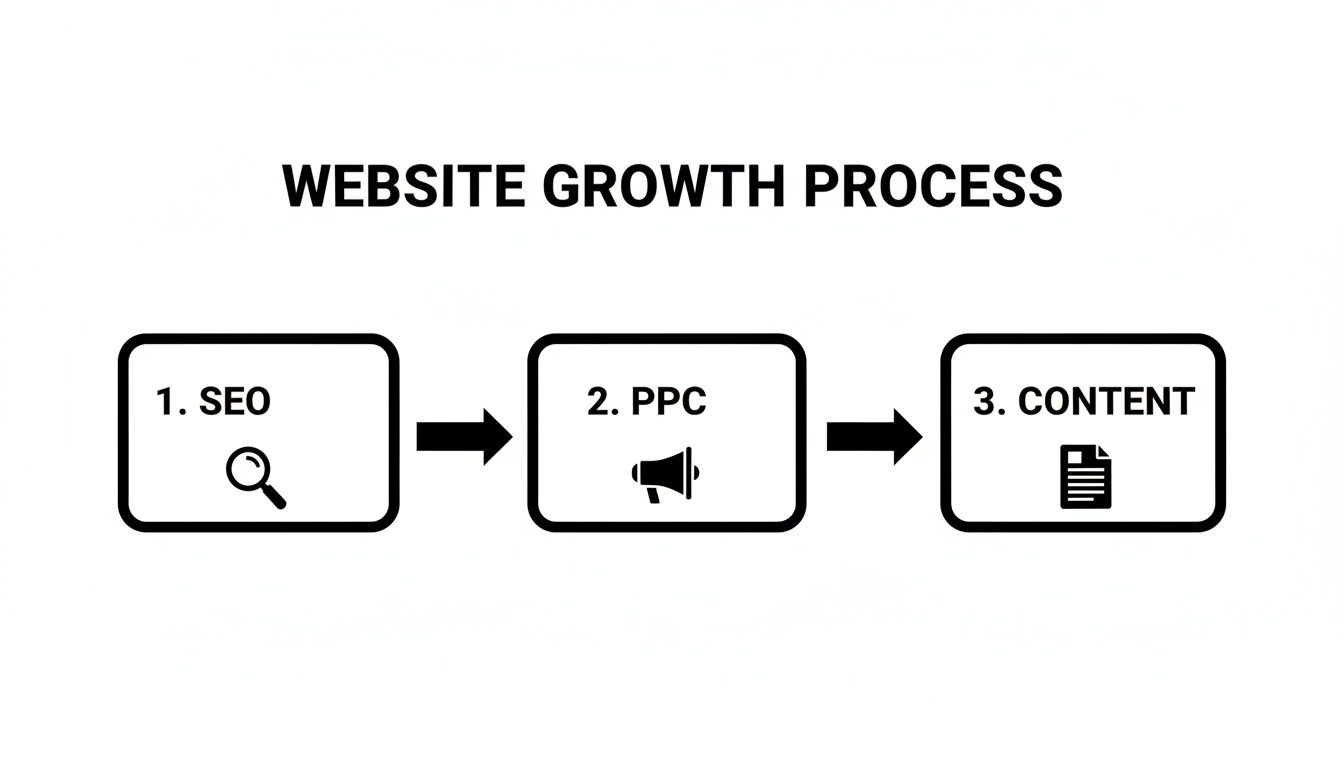
As you can see, after the launch, a powerful mix of SEO, PPC, and content marketing all work together. This is how you attract and engage your target audience, turning your shiny new website into a genuine sales and lead-generation engine for your business.
Australian Website Design Pricing In 2026
Alright, let's cut to the chase and tackle the big question on every Australian business owner's mind: "So, how much does a website actually cost?" The honest answer isn't just one number. It's a range that really depends on the size of the project, how complex it is, and the value you want it to deliver for your business. The best way to look at it is as an investment in your future growth.
The price for website design services in Australia is a bit like building a house. A simple one-bedroom unit is going to have a very different price tag than a custom-built, five-bedroom home with all the bells and whistles. The same logic applies here. You're paying for expertise, time, and the specific features needed to hit your business goals.
Understanding The Price Tiers
To give you a clearer picture, let's break down the typical investment levels. These are just guides, of course, and prices will vary from one agency to another, but they offer a solid starting point for your budget.
Entry-Level (Brochure) Websites: $3,000 – $7,000: This is the perfect fit for a local tradie, a new startup, or a consultant who just needs a professional online presence. Think 5-10 pages, a clean design based on a premium template, some basic SEO setup, and a contact form.
Business & E-commerce Websites: $8,000 – $20,000+: This tier is for established businesses that need more horsepower. We're often talking about custom design elements, integrating with booking or CRM systems, and e-commerce setups for selling a decent range of products online.
Custom Enterprise Solutions: $25,000 and up: This is the deep end of the pool. These are large-scale projects that need highly specialised features, custom-coded functions, complex integrations with third-party software (like inventory or logistics platforms), and a serious deep-dive into user experience design.
Key Factors That Influence The Final Cost
So why the huge price range? Well, the total cost is a sum of all its parts. Understanding what those parts are helps you see exactly what you're paying for and where your money is going.
Your website is a business asset, not just an expense. The right investment delivers a tangible return by generating leads, increasing sales, and building brand equity long after the initial build is complete.
Here are the key things that drive the cost:
- Custom Design vs. Template: A unique, from-scratch design will always cost more than customising a pre-built template. It simply takes a lot more design and development time.
- Number of Pages: It's simple maths—more pages mean more work on design, development, and content.
- E-commerce Functionality: Getting product catalogues, payment gateways, and shipping rules set up correctly is a complex job that adds to the bottom line.
- Special Features: Things like custom calculators, booking systems, member portals, or slick animations all require specialised development.
The demand for quality web design is massive. In 2024, the web design services market in Australia hit $1.4 billion and it's growing steadily as more businesses realise they need a strong digital presence. In Perth alone, there's a potential market of over 34,000 small businesses that still need a website—that's a huge opportunity for growth.
Ultimately, the best way forward is to get a detailed quote to really understand the investment. For a more detailed look, you can also check out our guide on website design cost in Australia to help you map out your budget.
How To Choose The Right Australian Web Design Agency

Picking a digital partner is easily one of the most important decisions you'll make for your business. This isn't just about hiring someone to build a website; it’s about finding a team that genuinely gets your vision and is invested in helping you grow. The right agency becomes an extension of your own business, so nailing this choice from the get-go is critical.
To cut through all the noise and sales pitches, you need a clear way to evaluate your options. It all starts by asking the right questions—the kind that go beyond the surface and get to the heart of how they work, what they actually know, and whether they’re truly committed to results.
Critical Questions To Ask Any Agency
Before you even think about signing a contract, arm yourself with these questions. The way an agency answers will tell you everything you need to know about their skills and if they’re the right fit for you.
- Can you show me real results from a business like mine? You’re looking for case studies with hard numbers, like a measurable jump in traffic or lead generation—not just pretty designs.
- Who will be my main point of contact? Clear, consistent communication is the absolute foundation of a successful project. You need to know you'll have a dedicated project manager you can count on.
- How do you handle project updates and communication? Ask about their process for regular check-ins and progress reports. You want to be kept in the loop, not left in the dark.
- What’s your process for testing and quality checks before launch? A professional agency will have a rock-solid testing phase to squash bugs and ensure everything works perfectly for your users.
It's also worth thinking about how they handle marketing services, and whether an in-house vs. agency marketing setup makes more sense for your business in the long run.
Red Flags To Watch Out For
Knowing what to look for is only half the battle; knowing what to avoid is just as important. Some promises sound too good to be true because, well, they are.
Be wary of any agency that guarantees a #1 ranking on Google. Real SEO is a long game, and promising instant top rankings is a classic, unrealistic sales gimmick.
Other red flags include a portfolio full of clunky or broken websites, vague pricing that leaves you guessing, and high-pressure sales tactics designed to rush you into a decision. A genuine partner will be transparent, patient, and happy to answer all your questions.
How To Evaluate Their Portfolio
Finally, when you’re looking through their past work, you need to dig deeper than just the visuals. A stunning website that’s a nightmare to use is completely useless. Put their portfolio to a real-world test by asking yourself:
- Is the navigation intuitive? Can you find what you’re looking for without getting frustrated?
- Does the website load quickly? A slow site is a huge turn-off for visitors and a killer for conversions.
- Is the design responsive? Pull out your phone and see how their sites actually look and feel on a smaller screen.
- Does the site have a clear goal? Is it obvious how to make a purchase, fill out a form, or find contact info?
Taking this structured approach ensures you choose a partner for website design services in Australia that not only builds a fantastic-looking site but also drives real, tangible success for your business.
Frequently Asked Questions
Stepping into the world of website design for the first time? It's natural to have a few questions. We've pulled together some of the most common queries we hear from Australian business owners, with straight-up answers to give you clarity and confidence.
How Long Does It Take To Build A Website In Australia?
The honest answer? It really depends on what you need built.
For a sharp, professional-looking 'brochure' style website with around 5-10 pages, you're typically looking at a 4-6 week turnaround. That timeframe covers everything from the initial strategy session right through to design, development, and finally, launch day.
But if you're venturing into e-commerce or need some specific custom features, the timeline naturally stretches. For a small online store or a site with unique functionality, it’s safer to budget for 8-12 weeks. For a large, completely bespoke platform with complex integrations, the project could take anywhere from 3-6 months, sometimes even longer. The biggest variable in all this is often how quickly you can provide feedback and content at each stage of the process.
Why Do I Need Ongoing Website Maintenance?
Think of your website like a car. You wouldn't drive it off the lot and then never get it serviced, right? Your website is no different. Ongoing maintenance is the essential servicing that keeps your digital investment secure, fast, and running smoothly.
It's not just about keeping the lights on; it's about protecting your business. Key tasks include:
- Software Updates: This is a big one. Regularly updating your platform (like WordPress) and any plugins is your first line of defence against hackers, as it patches up security weak spots.
- Regular Backups: If the worst happens, having a recent backup of your site means you can get back online quickly, with minimal disruption or data loss.
- Performance Monitoring: We keep an eye on things to make sure your site stays quick and responsive for every single visitor.
Skipping maintenance is one of the riskiest things you can do with your online presence. It’s like leaving the front door of your business unlocked – you’re inviting security threats, slow performance, and technical bugs that can tarnish your reputation and cost you customers.
Can I Update The Website Myself?
Yes, absolutely! In fact, we insist on it. Any decent Aussie agency will build your website on a Content Management System (CMS) like WordPress for this very reason. A CMS is designed from the ground up to let you manage your own content without needing to know a lick of code.
We'll always provide training so you feel completely comfortable making day-to-day changes. This means you’ll be able to edit text, upload a new blog post, or change out photos whenever you like. For the bigger stuff – like major design changes or adding new features – it’s always best to give your development team a bell. That way, you avoid accidentally breaking something important.
Ready to get a website that actually works for your business? The team at Website Builder Australia is here to help with everything from custom design and development to ongoing SEO and maintenance. Let’s have a chat and start building your digital future.


