

Ecommerce Website Design Australia: ecommerce website design australia
Diving into Australia's booming online market can feel a lot like setting up a flagship store in the middle of a bustling city. To make it a success, you need a brilliant ecommerce website design in Australia. It's the digital blueprint that turns millions of Aussie online shoppers into your loyal customers, where every detail—from layout to payments to mobile design—decides whether you thrive or just survive.
Your Blueprint For Australian Ecommerce Success
Think of your website as much more than just a page on the internet; it's your main digital storefront. The design is the very foundation your entire online business is built on. The layout, what we often call user experience (UX), and the checkout process, your digital payment counter, are what directly influence whether a visitor just browses or actually buys something.
A clunky, confusing site is the online equivalent of a messy shop with broken EFTPOS machines. Customers won't stick around. They'll just leave.
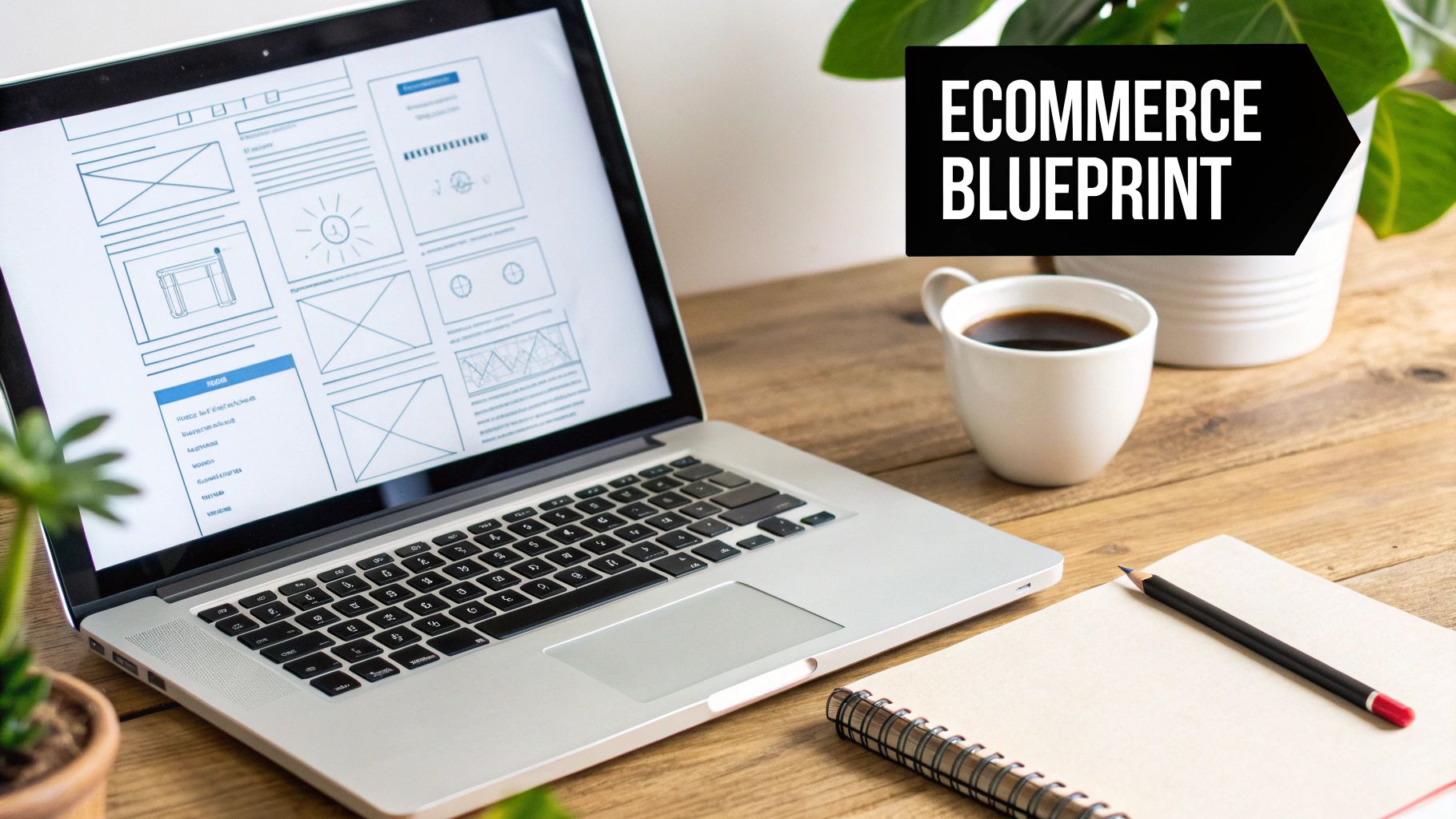
This guide is your complete roadmap. We'll walk you through the big decisions ahead, making sure your store not only looks professional but works brilliantly from day one. To really build a solid foundation, it's crucial to weave essential ecommerce website design best practices into your plan from the get-go.
Capitalising on a Growing Market
The opportunity here in Australia is massive, and it's growing fast. The local ecommerce market is exploding, with revenue tipped to hit US$37.10 billion in 2024 and climb to an incredible US$58.03 billion by 2029.
This isn't just a flash in the pan. The growth is powered by more and more Aussies getting online to shop. User penetration is at an impressive 65.3% in 2024 and is expected to surge to 84.4% by 2029. That means a strategic approach to building your website isn't just nice to have—it's non-negotiable. This is about creating a powerful business tool, not just a pretty brochure.
Your ecommerce website is your 24/7 salesperson, your brand ambassador, and your operations manager all rolled into one. Investing in a solid design from the start pays dividends in customer loyalty, conversions, and long-term growth.
What This Guide Covers
We're going to dive into the key areas you need to nail to build a strong online store that's perfectly tuned for the Australian market. Getting these foundational pillars right will set you on the path to success:
- Choosing the Right Platform: We'll help you decide between powerful options like Shopify and WooCommerce.
- Essential Features: It's all about integrating the local payment gateways and shipping solutions Aussies know and trust.
- Mobile-First Design: Optimising for the device most of your customers will be using is a must.
- Local Compliance: We'll help you navigate the important stuff like GST, Australian Consumer Law, and privacy regulations.
By following this blueprint, you'll have a clear path to building an online store that truly thrives.
Choosing The Right Ecommerce Platform
Picking the right ecommerce platform is hands down the most critical decision you'll make for your online store. The best way to think about it is like choosing the location for a physical shop. Are you leasing a premium spot in a managed shopping centre where security and maintenance are all taken care of? Or are you buying your own plot of land to build a custom store from the ground up?
This single choice lays the foundation for everything else. It dictates how you’ll manage your inventory, how customers will interact with your brand, and how much you can grow. It's a cornerstone of your ecommerce website design in Australia.

This is a massive deal here in Australia. It’s pretty surprising to learn that only 41% of Aussie small businesses even have a website, especially when a whopping 75% of consumers say they prefer to buy from businesses that have an online store. That gap represents a huge opportunity just waiting for savvy entrepreneurs to step in.
For most new Australian online stores, the decision usually comes down to two big names: Shopify and WooCommerce. Each one offers a very different approach to getting your products online.
Shopify: The All-In-One Solution
Shopify is that turn-key lease in a bustling shopping centre. It's a hosted platform, meaning everything you need—software, hosting, security, and support—is bundled into one neat monthly package. This all-in-one model is its biggest plus, especially for business owners who'd rather focus on marketing and products than on wrestling with technology.
Here's what you get with Shopify:
- Ease of Use: It has a brilliantly simple interface that lets you get a store up and running fast, no coding skills required.
- Managed Security and Hosting: Shopify handles all the technical headaches. Server maintenance, security updates, and site speed are their problem, not yours.
- Integrated Payment Gateway: With Shopify Payments built right in, you can start taking credit card payments almost immediately.
But, this convenience does come with a few strings attached. You're living in Shopify's world, so customisation is limited to their approved themes and apps. You might also face extra transaction fees if you decide not to use their in-house payment system.
WooCommerce: The Path To Full Control
If Shopify is the easy lease, then WooCommerce is like being your own architect and builder. It’s a self-hosted platform, which is really just a free, open-source plugin that bolts onto a WordPress website. This approach gives you absolute freedom and control over every tiny detail of your store's look and feel.
The benefits of WooCommerce are clear:
- Unlimited Customisation: Because it's open-source, the sky's the limit. If you can dream it up, a good developer can build it.
- No Platform Fees: The software itself doesn't cost a cent. Your only expenses are for web hosting, a domain name, and any premium themes or plugins you choose to add.
- Full Ownership of Data: You own your store and all its data, completely. You’re not locked into one company's ecosystem.
The trade-off for all this freedom is responsibility. You're the one in charge of finding good hosting, setting up security, and running all the necessary updates and maintenance. This path requires a bit more technical know-how or the budget to have a professional handle it for you. When weighing up your options, finding the best website builder for small business Australia is a crucial step that can make or break your online venture's success.
Making The Right Choice For Your Business
So, how on earth do you choose? It really boils down to your business goals, your comfort level with technology, and your budget.
Think about your five-year plan. Do you anticipate needing highly specialised features for a unique product, or is your priority rapid launch and straightforward operations? The answer will often point you towards the right platform.
To help you decide, we've put together a quick comparison of the two platforms from an Australian business perspective.
Shopify Vs WooCommerce: A Comparison For Australian Businesses
This table breaks down the key differences to help you see which platform aligns better with your needs.
| Feature | Shopify (Hosted) | WooCommerce (Self-Hosted) |
|---|---|---|
| Ease of Use | Excellent for beginners. Very intuitive setup process. | Steeper learning curve. Requires WordPress knowledge. |
| Initial Cost | Monthly subscription fee (starts around AUD $39/mo). | Plugin is free, but you pay for hosting, domain, and security. |
| Customisation | Good, but limited to themes and apps in the Shopify App Store. | Nearly limitless. Full control over code and design. |
| Maintenance | All handled by Shopify. No technical worries. | Your responsibility. You manage updates, security, and backups. |
| Best For | Businesses wanting a quick, easy launch with minimal technical hassle. | Businesses needing deep customisation and full control. |
At the end of the day, both Shopify and WooCommerce are fantastic tools for building a successful ecommerce website design in Australia. Shopify gives you simplicity and speed, making it great for getting to market quickly. WooCommerce, on the other hand, offers total freedom and scalability for those with a more complex vision. Weigh these points against what your business truly needs, and you’ll find the perfect foundation for your online empire. You might also want to explore the key features to look for in a website builder to round out your research.
Integrating Features Australian Shoppers Expect
Having a visually stunning website is a great start, but it's only half the battle. To really make a mark in the competitive Aussie market, your online store needs to do more than just look pretty. It has to deliver a seamless, trustworthy, and distinctly local buying experience.
This means building in the specific features that Australian shoppers don't just appreciate but now fully expect.
Think of it like setting up a physical shop. You wouldn't just throw products on shelves and hope for the best. You’d make sure your EFTPOS machine works flawlessly, you offer the payment methods people actually use, and your staff are helpful. The same logic applies online, where the right features are what turn casual browsers into paying customers.
Offer Flexible Payment Options Aussies Love
The checkout is the final hurdle, and any friction here is a guaranteed way to lose a sale. In Australia, our payment habits go well beyond just whipping out a credit card. Offering a variety of popular payment methods isn't just a nice-to-have; it's essential for building trust and closing the deal.
While essentials like Stripe and PayPal are must-haves for credit and debit card payments, the explosion of Buy Now, Pay Later (BNPL) services has completely changed how people shop.
- Afterpay and Zip: These homegrown BNPL giants are staples for Australian shoppers. Integrating them lets customers buy now and pay in interest-free instalments, which can seriously lift your average order value and conversion rates.
- Traditional Gateways: Don't forget the basics. A rock-solid system for accepting Visa, Mastercard, and American Express is still the go-to for many customers.
- Digital Wallets: Options like Apple Pay and Google Pay provide a super-fast, one-click checkout, especially on mobile. Less friction means a quicker sale.
Not offering someone's favourite way to pay is like telling them their money is no good. You can get the full rundown on providers in our complete guide to payment gateways in Australia.
Streamline Your Shipping and Logistics
For Aussie shoppers, clear and dependable shipping is a huge deal. Our massive geography creates unique logistics challenges, so your website has to tackle this head-on with total transparency. Ambiguous shipping policies or surprise costs at checkout are absolute conversion killers.
A recent study found that a whopping 47% of Australian online shoppers have ditched a cart because of poor shipping options. That number alone shows just how critical it is to nail your delivery strategy from day one.
To meet local expectations, you'll want to focus on a few key areas:
- Integrate with Local Carriers: Hook your store up with trusted local couriers like Australia Post, Sendle, or Aramex. This automates everything from calculating shipping rates in real-time to printing labels and sending customers tracking updates.
- Offer Varied Shipping Tiers: Give people clear choices. This could be standard shipping, an express post option for those in a hurry, and a free shipping threshold (e.g., "Free shipping on orders over $100") to encourage bigger spends.
- Implement Click and Collect: If you have a physical store, this is a game-changer. Letting customers order online and pick up in-store blends digital convenience with instant gratification—and saves them on shipping fees.
Build Trust with Social Proof and Quality Visuals
In the online world, trust is your most valuable asset. Since customers can't physically touch or see a product, they look for other signals to feel confident about their purchase. This is where social proof and high-quality visuals become your most powerful sales tools.
Your product pages need to work overtime to mimic that in-store experience. This means investing in professional, high-resolution photos that show your products from every conceivable angle. Make sure you have a zoom function and include lifestyle shots that show the product being used, helping customers picture it in their own lives.
Alongside brilliant visuals, you need to harness the power of customer feedback. Authentic reviews and ratings are one of the most convincing forms of social proof you have. Displaying genuine feedback right there on your product pages helps validate the quality of your items and eases the minds of new buyers, making them feel much more comfortable hitting that "Add to Cart" button.
Designing A Winning Mobile User Experience
Let's be blunt: your mobile website is now your main storefront. For most Australian shoppers, that first tap on their phone is their first—and often only—interaction with your brand. That single experience will instantly shape what they think of you.
A brilliant mobile design feels like a perfectly organised boutique: intuitive, fast, and genuinely a pleasure to browse. A poor one, on the other hand, is a cluttered, slow-loading mess that sends customers running straight to your competitors. That isn't an exaggeration. A frustrating mobile experience isn't just an annoyance; it's a direct loss of business. Getting this right is a non-negotiable part of modern ecommerce website design in Australia.
Embrace A Mobile-First Design Philosophy
Thinking "mobile-first" is more than just making your desktop site shrink to fit a small screen. It’s a complete shift in how you approach the design process. It means you design the entire customer journey for the smallest screen first, then adapt and expand that experience for bigger devices like tablets and desktops.
This forces you to be ruthless with your priorities. There's simply no room for clutter on a mobile screen. Every single element, from the navigation menu to the product photos, has to earn its place. This discipline results in a cleaner, faster, and more focused experience for everyone, no matter what device they're using.
The numbers don't lie. Mobile shopping is king in Australia, with over 65% of online purchases now happening on a phone. Yet, a shocking 53% of users will abandon a site if it takes more than a few seconds to load. You can find more insights into Australian ecommerce trends at marketinglab.com.au.
Focus On Speed And Performance
On mobile, speed isn't a feature—it's everything. Every single millisecond counts. A slow site is one of the biggest killers of sales, leading to sky-high bounce rates and abandoned carts. Your customers are busy, often browsing on the go with patchy mobile data, and they just won't wait.
Getting your site up to speed involves a few key moves:
- Compress Images: Big, heavy images are the number one culprit for slow pages. Use modern image formats and compression tools to shrink file sizes without turning your photos into a pixelated mess.
- Minimise Code: Clean, efficient code (HTML, CSS, JavaScript) loads faster. Get rid of any unnecessary scripts or clunky plugins that are slowing things down.
- Leverage Browser Caching: This clever trick lets a user's browser "remember" parts of your site, so it doesn’t have to reload everything from scratch every time they visit.
A one-second delay in mobile load time can torpedo your conversion rates by up to 20%. Think of speed as a direct investment in your bottom line. The faster your site, the more you sell.
Simplify Navigation And Checkout
Using a website with your thumb is a totally different ball game to using a mouse and keyboard. Your design has to respect that reality. Navigation needs to be dead simple, intuitive, and easy to manage with one hand.
Thumb-Friendly Design Is Key
Think about how people hold their phones. All your critical buttons—like menus, "Add to Cart," and form fields—need to be within easy reach of a thumb. This is what we call the "thumb zone." Forcing someone to stretch their hand just to navigate your site is a classic rookie mistake that creates friction and frustration.
The Checkout Must Be Flawless
A clunky, complicated checkout process is poison for mobile sales. You have to strip it back to the absolute bare essentials.
- Minimise Form Fields: Only ask for what you absolutely need to process the order. The less typing a customer has to do on a tiny screen, the better.
- Enable Guest Checkout: Never force people to create an account. It's a massive barrier for new customers who just want to buy something quickly.
- Integrate Digital Wallets: Options like Apple Pay and Google Pay are a godsend. They allow for a one-tap checkout, creating a seamless and lightning-fast payment experience that mobile shoppers absolutely love.
Navigating Australian Ecommerce Laws And Compliance
Running an online store in Australia is more than just slick marketing and great products. You're also stepping into a world with a clear set of rules you absolutely cannot ignore. Think of these legal obligations as the digital version of a shop’s health and safety codes—get them right, and you're not just avoiding hefty fines, you're building the kind of trust that turns a one-time browser into a loyal customer.
Compliance isn't an add-on; it's a core part of your ecommerce website design in Australia. It needs to be baked into your store's DNA right from the start. Everything from how you display prices to the way you handle a customer's personal details must be in line with Aussie law.
Understanding Australian Consumer Law
The big one you need to get your head around is the Australian Consumer Law (ACL). This is the national rulebook designed to keep things fair for consumers, and it applies to any business selling to Australians, no matter where in the world you're based. For an online store, this has real, practical impacts on your day-to-day operations.
The ACL gives your customers a set of non-negotiable rights every time they buy something. Your website’s policies have to honour these guarantees, no questions asked.
- Refunds and Returns: If a product is faulty, doesn't do what it's supposed to, or isn't as described, you must offer a solution. This could be a refund, repair, or replacement. Slapping a "no refunds" policy on your site is a surefire way to get into hot water—it's illegal.
- Warranties and Guarantees: Your products must be of acceptable quality and last a reasonable amount of time. This consumer guarantee exists automatically, even if you don't offer a separate manufacturer's warranty.
- Clear and Honest Advertising: You can't mislead customers with fuzzy claims about a product's features, where it's from, or what it can do. Every description on your site needs to be accurate and truthful. Plain and simple.
Your terms of service and refund policy aren't just website copy; they're legally binding documents. Getting them right—making them clear, fair, and fully compliant with the ACL—is one of the most important things you can do to protect your business and show customers you're trustworthy.
Handling GST Correctly
Next up is the Goods and Services Tax (GST). This is a critical piece of the puzzle. If your business turns over $75,000 or more a year, you are legally required to register for GST. Once you're registered, you need to add a 10% GST charge to most of the goods and services you sell in Australia.
Your website has to be crystal clear about this. Prices should state upfront whether they include GST. Hiding the tax until the very last step of the checkout is not only a frustrating experience for the customer but can also be seen as misleading under the ACL.
Protecting Customer Data With The Privacy Act
Every time a customer places an order, they're handing over sensitive personal information—their name, address, phone number, and payment details. The Privacy Act 1988 dictates exactly how you must handle this data. Getting this wrong can lead to massive fines and completely wreck your brand's reputation.
Your main responsibility here is to have a clear and easy-to-find Privacy Policy on your website. This document needs to explain, in simple terms:
- What kind of personal information you collect.
- Why you're collecting it.
- How you plan to use it and who you might share it with (like your payment gateway or shipping company).
- How customers can see the info you hold on them or make a complaint.
Of course, having a policy isn't enough; you have to actually protect the data. This brings us back to the technical side of things—your ecommerce platform and hosting must be secure enough to prevent data breaches, reinforcing why a solid technical foundation is so crucial for your online store.
Your Step-By-Step Ecommerce Launch Plan
Getting all the pieces to fall into place for a successful launch isn't magic—it's about following a clear, structured plan. Think of this roadmap as your guide, breaking down the entire ecommerce website design Australia project into simple, manageable chunks. It’ll take you from that first spark of an idea right through to the big day, making sure nothing critical gets missed along the way.
A solid launch is a process, not a single event. It's about nailing each stage before moving on to the next.
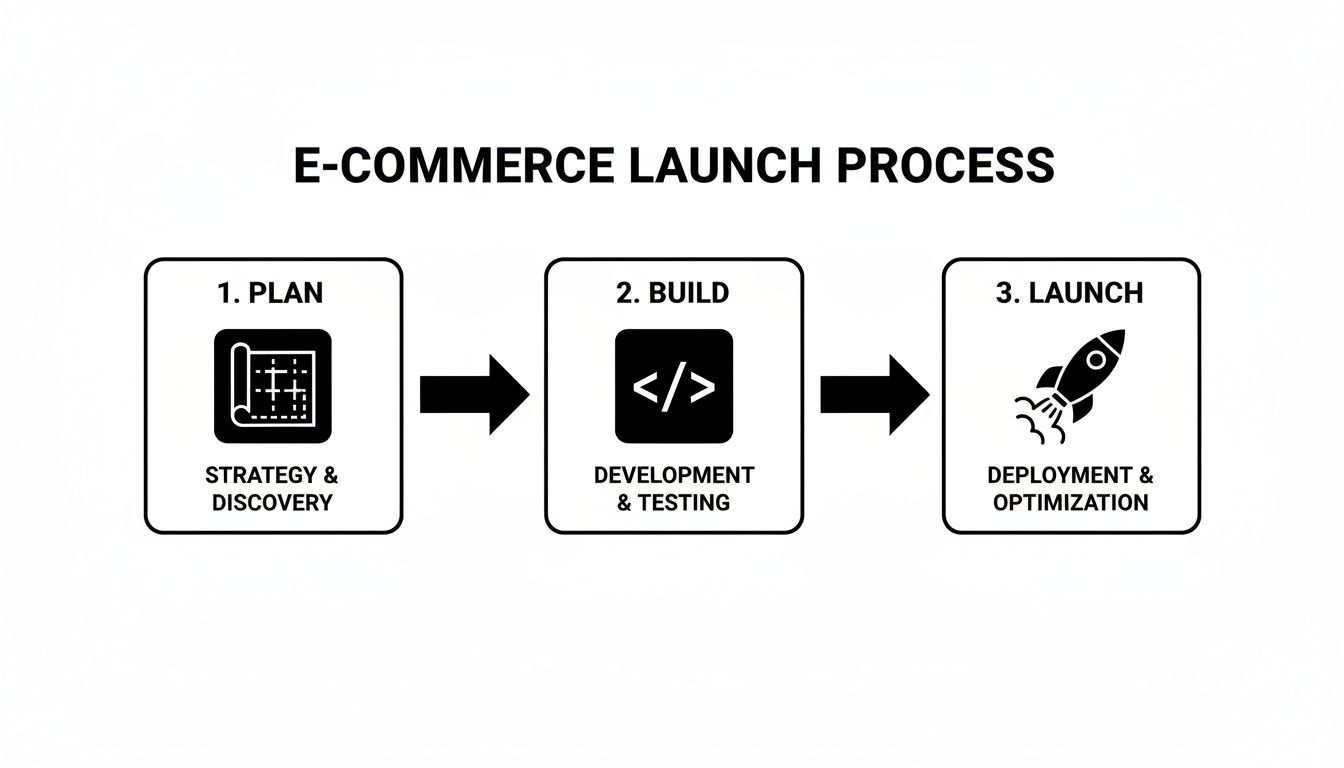
This simple flow—Plan, Build, and Launch—shows how a strong strategic foundation is the key to everything that follows.
Phase 1: Initial Planning and Strategy
This is where it all begins. It’s the blueprint phase, where you figure out exactly what you want to achieve before a single design is mocked up or a line of code is written. Getting this right prevents costly headaches down the track and ensures the final website actually does what your business needs it to do.
- Define Your Audience and Niche: Seriously, who are you selling to? What makes your products the ones they should choose? Nailing this answer will shape every single design and marketing decision you make later.
- Set Your Budget and Timeline: Be honest with yourself about the costs. You'll have platform fees, design and development costs, and a marketing budget to think about. A realistic timeline keeps the whole project moving without unnecessary stress.
- Choose Your Platform: This is a big one. Based on your budget, products, and how tech-savvy you are, you'll need to decide between a hosted solution like Shopify or something more hands-on like WooCommerce.
Phase 2: Design and Development
With a solid plan in your back pocket, it’s time to start building. This is the exciting part where your ideas start becoming a real, functional online store. It's a creative and technical dance that brings the look, feel, and features of your website to life.
- Wireframing and Prototyping: First, we sketch it out. Creating a basic layout helps map out how a customer will move through your site and where all the important bits and pieces will go.
- Visual Design: Now for the fun stuff. This is where you apply your branding—your logo, your colours, your fonts—to create a visual identity that really connects with your customers.
- Development and Feature Integration: Here's where the nuts and bolts come together. The site gets built, and we plug in all the essential features like Australian payment gateways, shipping calculators, and crucial security measures.
Remember, the point of this phase isn’t just to build a pretty website. It's to create an experience. Every choice you make should make it dead simple for a visitor to find what they want and hand over their money.
If you want to dive deeper into the business side of things, check out our guide on how to open an ecommerce business in Australia.
Phase 3: Content and Pre-Launch Testing
You're almost there! Before you flick the switch and go live, this final stage is all about filling your store with great content and testing absolutely everything to make sure launch day is a celebration, not a catastrophe.
- Load Products and Content: Time to upload those gorgeous, high-quality product photos. Write product descriptions that sell, and create those essential pages like 'About Us' and your privacy policy.
- Conduct Thorough Testing: Click every link. Test every button. Fill out every form. Crucially, process a bunch of test orders to ensure the checkout and payment systems are working perfectly on both desktop and mobile.
- Final Launch Checklist: Run through one last check of your SEO settings, make sure your analytics are properly connected, and set up your backup procedures. Then, and only then, are you ready to go live.
Frequently Asked Questions
When you're diving into the world of ecommerce in Australia, a few questions always pop up. It's completely normal. Here are some straightforward answers to the most common queries we hear, helping you get your bearings before you start your online journey.
How Much Does An Ecommerce Website Cost in Australia?
Thinking about the cost of an online store is a bit like buying a car. You could go for a reliable, ready-to-drive model off the lot, or you could commission a custom-built machine tuned for high performance. It all depends on what you need.
- DIY Template Sites (e.g., Shopify Basic): For a professional setup using a great-looking pre-built theme, you're looking at around $2,000 to $7,000. This is a fantastic starting point for new businesses and startups who need to get online quickly without breaking the bank.
- Custom-Designed Stores: If you're after a unique look with more specialised features, the investment typically lands between $10,000 and $25,000. This is where an agency builds a bespoke design from the ground up that truly reflects your brand.
- Advanced Custom Solutions: For larger, established businesses needing complex integrations, one-of-a-kind features, and heavy-duty development, the budget can easily start at $30,000 and go up from there.
Ultimately, the final figure comes down to your choice of platform, the complexity of the design, and how many custom bells and whistles you need.
How Long Does It Take to Build an Online Store?
Just like the cost, the timeline for building an ecommerce site is tied directly to how complex it is. A simple store based on a template can get up and running surprisingly fast. A fully custom build, on the other hand, needs more time in the workshop for proper planning, design, and development.
A typical ecommerce project has a few key phases: Discovery and Strategy (1-2 weeks), Design and UX (2-4 weeks), Development and Integration (4-8 weeks), and finally, Testing and Launch (1-2 weeks).
As a general guide, here's what you can expect:
- Template-Based Website: You could be selling online in as little as 4 to 6 weeks.
- Custom Design Website: A more tailored project will usually take between 8 to 12 weeks from kick-off to launch.
- Highly Complex Builds: These bigger projects can take 3 months or longer, all depending on the specific moving parts.
Should I Use a Template or a Custom Design?
Deciding between a template and a custom design really boils down to balancing your budget, your timeline, and where you see your business heading in the long run.
Think of it this way: a pre-built template is like buying a high-quality suit off the rack. It’s quick, affordable, and looks sharp. A custom design is like getting that same suit perfectly tailored. It costs more and takes a bit longer, but the fit is flawless and entirely unique to you.
Templates are perfect for businesses needing a fast launch on a tight budget. A custom design is the better path for established brands aiming for a distinctive user experience and specific functions that make them stand out from the crowd.
Ready to build an online store that actually drives results? The team at Website Builder Australia specialises in creating high-performance ecommerce websites tailored for Australian businesses. Let's discuss your project today!


