

Website Design Cost Australia A Guide to Smart Budgeting
So, how much does a website really cost in Australia? The short answer is it’s a bit like asking "how much is a car?" – it depends on what you need. But for a ballpark figure, a professional website can range anywhere from $3,000 for a basic setup to well over $30,000 for a complex, custom-built machine.
The final price tag on your website design in Australia really comes down to the size and complexity of your vision.
Decoding the Price of Australian Websites
Thinking about your website budget is a lot like planning to build a house. You wouldn't expect a stunning, architecturally designed mansion in Brisbane to have the same price tag as a standard project home. The materials, the complexity of the blueprint, and all the custom features are what shape the final cost.
Websites work exactly the same way.
A simple online brochure with a few key pages is your project home—it’s functional, looks good, and gets the job done without breaking the bank. On the other hand, a large e-commerce store with integrated payment systems, live inventory management, and customer accounts is your custom mansion. It’s a significant investment because it’s built to do so much more.
Core Cost Components
Before we get into the nitty-gritty, it helps to understand the main ingredients that go into almost every web design quote. These are the foundational elements that any web design agency or freelancer will look at when figuring out the cost of your project:
- Design Complexity: Are we starting with a proven, pre-built template or are we creating a completely custom design from a blank canvas?
- Functionality and Features: Do you just need a simple contact form, or are we talking about a sophisticated online booking system that syncs with your calendar?
- Number of Pages: It makes sense that a five-page site will cost less to build than a fifty-page one that needs extensive design and content work for every single page.
- E-commerce Needs: If you're selling online, you're adding extra layers of complexity, from secure payment gateways and shipping calculators to order management.
For a lot of Aussie businesses, that initial quote is just the starting point. While a professional design might come in between $5,000 and $10,000, once you factor in first-year costs like hosting, maintenance, and creating content, that total investment can easily climb beyond $35,000. Industry analysis often provides a deeper look into these total costs.
To give you a clearer picture, let's look at some typical starting price ranges for different website types you'll find in the Australian market. This should give you a realistic baseline as you start planning your budget.
Estimated Website Design Costs in Australia at a Glance
Here’s a quick overview to help you place your project on the map. Keep in mind these are starting points, and the final price will shift based on the features we just talked about.
| Website Type | Typical Price Range (AUD) | Best For |
|---|---|---|
| Basic "Brochure" Site | $3,000 – $6,000+ | Startups, sole traders, or businesses needing a simple online presence. |
| Small Business Site | $6,000 – $15,000+ | Established businesses requiring lead generation and custom design. |
| E-commerce Store | $10,000 – $30,000+ | Businesses selling products online with full payment & inventory systems. |
| Custom Web App | $30,000+ | Companies needing unique, complex functionality like a booking platform. |
These figures are a great starting point for any conversation. They help frame what’s possible and set realistic expectations before you dive into getting detailed quotes for your specific project.
The Core Factors That Shape Your Website Quote
Getting a website quote can sometimes feel like trying to solve a puzzle. You see the final number, but what does it actually represent? Think of it like building a house in Brisbane. The final price isn't just a random figure; it’s a detailed sum of the architectural plans, the construction work, and the interior fit-out. Let's pull back the curtain and look at the key ingredients that make up the website design cost in Australia.
When you understand these core pieces, you can see exactly where your money is going. It empowers you to make smarter decisions about where to invest for the best results.
Design: Template vs. Custom Blueprint
One of the first, and biggest, factors influencing the cost is the design itself. It's really the difference between buying an 'off-the-plan' home and hiring an architect to draw up a custom blueprint just for you.
- Template-Based Design: This is your 'off-the-plan' option. We start with a professionally designed, pre-built theme and then mould it to fit your brand. We'll customise the colours, fonts, logo, and content to make it yours. It’s a faster and more affordable approach, making it a fantastic choice for many small Aussie businesses.
- Custom Design (Bespoke): This is the full 'architectural' experience. A designer starts with a completely blank canvas, creating a unique visual identity and user journey from scratch. Everything is crafted specifically around your business goals and who you're trying to reach. This gives you ultimate flexibility and a one-of-a-kind website, but it naturally takes more time and creative energy, which is reflected in the price.
A template gives you a solid, reliable foundation, while a custom design builds your digital home brick by brick, making sure every single element is perfectly placed.
Development: The Digital Construction Work
If design is the blueprint, development is the actual construction. This is the hands-on part where code is written and systems are configured to bring the visuals to life and make everything work. The complexity of this "build" has a direct impact on your quote.
A simple five-page brochure site with a contact form is like building a small, single-storey structure. It's straightforward.
But start adding more advanced features, and it’s like adding extra rooms, complex plumbing, and sophisticated electrical systems. Every new function requires specialised development work.
Key Takeaway: The more your website does, the more it will cost. Functionality is a primary driver of development time and your final quote. It's smart to prioritise features that solve a real problem for your customers or make your business run smoother.
Content Creation: Furnishing Your Digital Home
A beautifully built website with no content is like a stunning new house that’s completely empty—it has potential, but it’s not very useful. Your content is all the text, images, videos, and blog posts that tell your story and show visitors your value. You can supply this yourself, but professional content creation is a specific skill and often a separate item on a quote.
This can cover things like:
- Professional Copywriting: A good copywriter crafts compelling, SEO-friendly words that convince visitors to take the next step. They might charge $150-$250 per hour.
- Photography & Videography: High-quality, authentic photos of your team, products, or work in action make a massive difference. Stock photos are cheap, but a professional photoshoot can range from $500 to $2,000.
- Graphic Design: This involves creating custom icons, infographics, or other branded visuals that make your pages pop.
Just like furnishing a home adds to the overall project cost, filling your site with high-quality, engaging content is a crucial investment that directly impacts how effective it will be.
Specialised Features: The High-End Installations
Finally, some features are like installing a commercial-grade kitchen or a smart home automation system—they're complex, add significant value, and come with a higher price tag. The most common example is e-commerce.
Turning a website into a fully-fledged online store means weaving together multiple systems that have to work in perfect harmony:
- Payment Gateways: Securely taking payments through services like Stripe, PayPal, or Afterpay.
- Inventory Management: Automatically tracking stock levels as products are sold.
- Shipping Calculators: Linking up with couriers to provide customers with real-time shipping quotes.
- Customer Accounts: Letting people create profiles, view their order history, and save their details for next time.
Other examples include booking systems that sync with your calendar, custom-built calculators, or members-only content portals. Each of these requires specialist development and adds a layer of complexity that will be clearly outlined in your website design quote.
Choosing Your Path: DIY vs Freelancer vs Agency
Figuring out who builds your website is just as crucial as deciding what gets built. It’s a decision that will directly steer your budget, timeline, and the final quality of your online home. You’ve basically got three paths to choose from, and each one comes with its own set of trade-offs when it comes to cost, time, and customisation.
Let's walk through these options. The goal is to match your business needs with the right kind of partner, making sure your investment in website design in Australia is a smart one from day one.
The DIY Route: Website Builders
The Do-It-Yourself path, using platforms like Wix, Squarespace, or Shopify, is the most wallet-friendly way to get started. I like to think of it as flat-pack furniture; you get all the pieces and a set of instructions, but you’re the one who has to put it all together.
This is a fantastic option for startups, sole traders, or anyone running on a tight budget who’s happy to invest their own sweat equity. You get user-friendly drag-and-drop tools and a bunch of pre-made templates, which makes getting a site live pretty quickly a realistic goal.
The catch? You trade some control and uniqueness. While you can tweak templates, you're ultimately playing in someone else's sandbox. If you need complex features or a truly one-of-a-kind design, you’ll probably hit a wall. And when something breaks, you’re turning to help guides and community forums, not a dedicated expert.
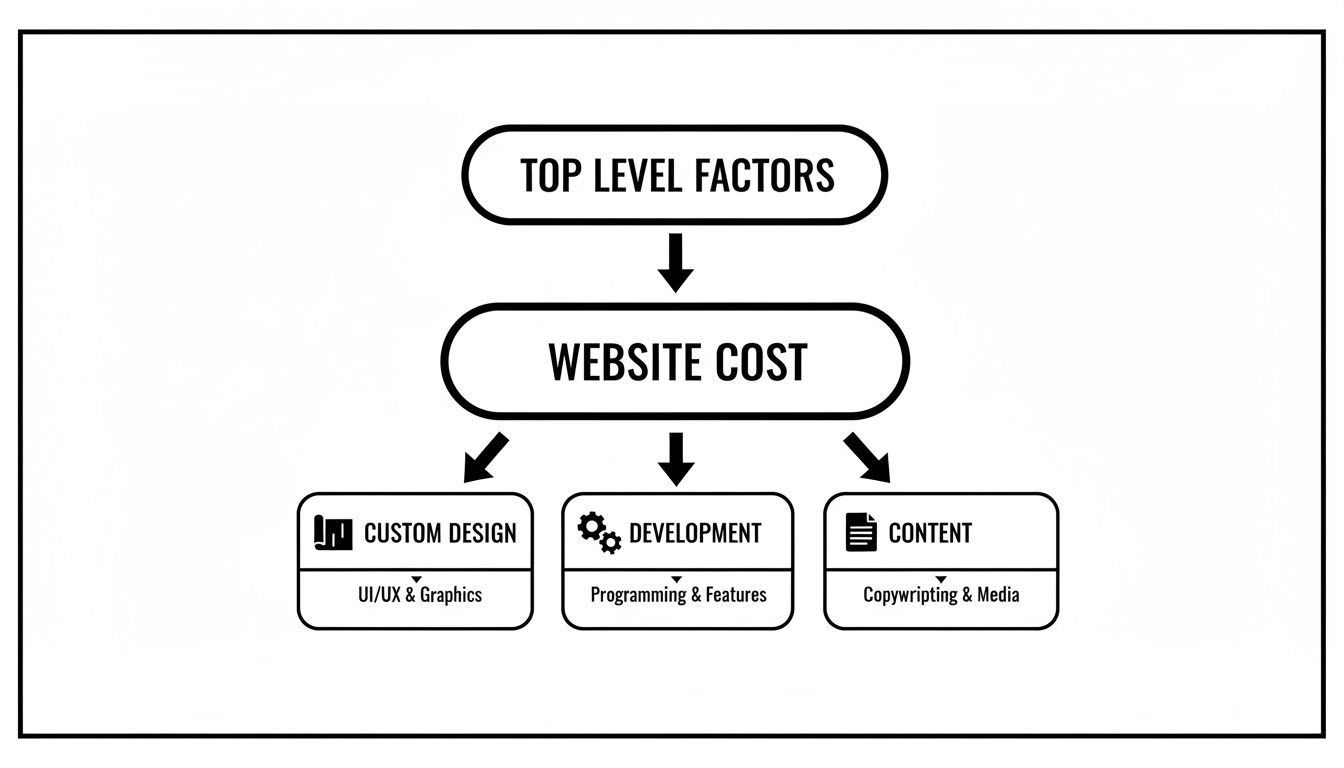
No matter which path you take, this flowchart shows that the core costs always boil down to the same three things: the design blueprint, the technical build, and the words and images that fill the pages.
Working with a Freelancer
Hiring a freelancer is like bringing in a specialised tradie—say, a skilled carpenter—to build custom furniture for your home. You’re paying for individual expertise and a much more personalised touch than you'd get from a DIY kit.
Aussie freelancers typically charge somewhere between $50 and $150 per hour, offering a fantastic middle ground. You get a custom-designed website that feels more unique and performs better than a template, all without the big overheads of an agency. Plus, you’re usually talking directly to the person doing the work, which can really speed things up.
The main risk here is capacity. A solo operator is juggling multiple clients, so an unexpected illness or family emergency can throw your project timeline off course. Their skillset might also be specialised; a brilliant designer might not be a gun at complex coding or search engine optimisation, which could mean you need to hire other experts to fill the gaps.
Partnering with an Agency
Engaging a web design agency is the full-service option. It’s like hiring a construction company that has the architect, builders, and project manager all under one roof. It's the most comprehensive—and yes, most expensive—choice, but it delivers a complete, professionally managed solution from start to finish.
Agencies here in Australia will often charge from $80 to $200 per hour, with most projects starting at $10,000 and going up from there. For that investment, you get a whole team of specialists on your side: designers, developers, copywriters, and SEO pros.
Key Takeaway: An agency’s real value is in its structured process, quality control, and ongoing support. They manage everything, which frees you up and minimises risk. This makes them ideal for established businesses or complex e-commerce projects where getting a solid return on investment is the top priority.
The right choice really does depend on your specific situation. If you’re clear on your budget, your technical comfort level, and your long-term business goals, you'll find the path that makes the most sense for you.
Website Build Options Compared: DIY vs Freelancer vs Agency
To help you see it all side-by-side, here’s a table breaking down how the three options stack up against the factors that matter most to business owners.
| Factor | DIY Platforms | Freelancer | Agency |
|---|---|---|---|
| Upfront Cost | Very Low ($0 – $500) | Moderate ($3,000 – $10,000) | High ($10,000 – $50,000+) |
| Time Investment | High: You do all the work. | Medium: You provide feedback and content. | Low: The agency manages the entire project. |
| Customisation | Low (Limited by templates) | High (Bespoke design is possible) | Very High (Fully custom solutions) |
| Ongoing Support | Limited (Platform helpdesks) | Variable (Depends on individual) | Comprehensive (Dedicated support team) |
| Scalability | Limited (Can outgrow platform) | Good (Can be expanded) | Excellent (Built for long-term growth) |
Ultimately, choosing between DIY, a freelancer, or an agency is a strategic business decision. By weighing up these factors, you can make an informed choice that sets your website—and your business—up for success right from the get-go.
How Website Type Influences Your Budget
The type of website you need is easily the biggest factor that will shape your final cost. It's a simple truth: not all websites are built the same because they're designed to do very different jobs. Getting your head around this early is the secret to setting a realistic budget for your website design here in Australia.
Think of it like buying a work vehicle. A tradie's ute in Brisbane has a totally different purpose and price tag than a refrigerated delivery van for a Sydney caterer. They're both commercial vehicles, sure, but what they do dictates their design, features, and ultimately, their cost.
Let's break down the common website types to see how their purpose defines the investment you'll need to make.
The Foundational Small Business Website
For most service-based businesses in Australia—from a local cafe in Melbourne to a consulting firm in Perth—the game is all about building credibility and bringing in leads. This is where the classic small business website truly shines. It's your digital shopfront and your hardest-working salesperson, on the clock 24/7.
A site like this will typically include:
- A professional, custom-branded design that makes you look the part and builds trust.
- The essential pages: Home, About Us, Services, and a Contact page with a lead capture form.
- A blog or news section to share updates and give your SEO a boost.
- Full mobile responsiveness so it looks fantastic on any screen.
The focus here is all about clear communication and making it dead simple for a potential customer to get in touch. The tech behind it is pretty straightforward, which helps keep the website design cost in Australia for a small business site in a manageable range, usually between $6,000 and $15,000.
The E-commerce Engine
The moment you decide to sell products online, you're not just building a simple brochure site anymore. You're building a complex retail machine. An e-commerce website, whether for a Sydney fashion label or a Brisbane-based artisan, has a much bigger job to do than just looking good.
It needs a whole lot of specialised functions all working together flawlessly.
An e-commerce website is an active business tool, not just a passive brochure. It processes transactions, manages data, and automates key parts of your sales funnel, which is why the investment is significantly higher.
These sites need a powerful backend to manage stock levels, secure payment gateways to handle transactions safely, and integrated shipping calculators to figure out delivery costs on the fly. This extra complexity is why e-commerce websites typically start between $10,000 and $25,000, with high-end builds easily reaching $50,000 or more depending on the features. This investment reflects the technical muscle needed to create a smooth, secure shopping experience, as our guide to building an effective e-commerce website explains in more detail.
The Custom Web Application
At the very top of the ladder, you have custom web applications. These aren't really 'websites' in the traditional sense; they are one-of-a-kind software solutions built from scratch to solve a very specific, often complex, business problem. We're talking about things like a custom booking platform for a national tour operator or a private members-only portal for a professional association.
These projects are built from the ground up to perform unique tasks that you just can't get from off-the-shelf software. They often involve complex databases, integrations with other software (via APIs), and serious security protocols. The whole process is far more intensive, requiring detailed planning, user testing, and long-term technical thinking.
Because they are completely bespoke, the cost for these applications kicks off at around $30,000 and can easily climb into the six-figure range, all depending on the scale and complexity of the problem you're solving. The price tag really just reflects the creation of a unique business asset—one designed to give you a major competitive edge or dramatically streamline how your business runs.
Budgeting for Hidden and Ongoing Website Costs
The moment your new website goes live is genuinely exciting, but it’s the start of the journey, not the finish line. Thinking the initial build is your only expense is a bit like buying a car and forgetting about petrol, insurance, and regular servicing. To keep it running well and holding its value, your website needs ongoing investment.
Factoring these recurring costs into your budget from day one is absolutely crucial for sustainable growth. It keeps your digital storefront secure, functional, and effective, saving you from nasty surprise bills that can completely derail your financial plans.
Let's break down the most common ongoing expenses you'll need to account for.
Web Hosting: Your Digital Rent
Think of web hosting as the plot of land your digital house is built on. It’s the server space you rent to keep your website files online and accessible to the world, 24/7. Without it, your site simply doesn't exist online.
Hosting costs here in Australia can vary wildly based on the type and quality of service you choose.
- Shared Hosting: This is the most affordable option, where your site shares a server with others. It's a great starting point for new businesses, typically costing $10 to $30 per month.
- Managed Hosting: A definite step up. This service includes proactive support, security monitoring, and software updates, taking a lot of the technical stress off your plate. For many Aussie small businesses, this is the sweet spot, ranging from $30 to $150 per month.
- Dedicated Servers: For high-traffic sites or complex e-commerce stores, this gives you an entire server to yourself for maximum performance. Expect to pay anywhere from $150 to $500+ per month.
Getting the right plan is critical for your site's speed and reliability. You can explore our detailed breakdown of the best web hosting in Australia to find the perfect fit for your specific needs.
Domain Name and SSL Certificate Renewals
Your domain name is your website’s street address (e.g., yourbusiness.com.au). It’s not a one-time purchase; it requires an annual renewal fee. This is a non-negotiable cost to keep ownership of your online brand. You should budget around $20 to $50 per year for a standard .com.au domain.
An SSL certificate is that little digital padlock that encrypts data between your site and your visitors, showing "https" in the URL. It's absolutely vital for security and building customer trust. While many hosting plans throw in a basic SSL, more advanced certificates can cost between $50 and $500 annually.
A website without a valid SSL certificate is often flagged as "Not Secure" by browsers like Chrome, which can deter up to 85% of potential customers from proceeding. It’s a small annual fee for a huge amount of credibility.
Website Maintenance and Support Plans
Just like a car, a website needs regular tune-ups to keep it humming along. This is where a maintenance plan comes in—it’s your digital mechanic, making sure everything stays secure, up-to-date, and functional. And to help manage these recurring expenses, it's always worth looking for exclusive hosting promo codes that can trim down your monthly or annual bills.
A typical maintenance plan handles the important stuff:
- Software Updates: Regularly updating your CMS (like WordPress), themes, and plugins to patch security holes.
- Security Scans: Proactively checking for malware and any suspicious activity.
- Regular Backups: Creating copies of your site so it can be quickly restored if the worst happens.
- Performance Checks: Making sure your site stays fast and responsive for your visitors.
Maintenance plans in Australia generally cost between $100 and $500 per month, depending on how complex your site is. Think of it as an insurance policy. It prevents small issues from snowballing into costly emergencies down the track, protecting the investment you've already made.
How to Get a Clear and Accurate Website Quote
Trying to get a straight answer on website design costs in Australia can feel a bit like herding cats. But if you do your homework first, you can get a clear, reliable estimate that won't give you a nasty surprise later.
The secret? Approach your potential web designer with a well-defined vision. Vague requests only ever lead to vague quotes, which are often a recipe for misunderstandings and hidden costs down the line. To get a quote you can actually trust, you need to give them a clear brief. Think of it like giving an architect a detailed wish list before they start drawing up blueprints—the more you tell them upfront, the more accurate their pricing will be.
Prepare Your Project Brief
Before you even think about sending that first email, take a moment to pull together a simple but thorough document. This brief will be the cornerstone of every conversation you have from here on out.
Here’s a quick checklist to get you on the right track:
- Define Your Business Goals: What’s the number one job of this website? Is it to bring in new leads, sell products online, or just serve as a professional online brochure?
- List Essential Features: Make a list of your "must-haves." This could be anything from a blog and photo gallery to an online booking system or a space for customer reviews.
- Gather Inspiration: Find 2-3 websites you really like. They don't have to be in your industry. Just jot down what you admire about them – is it the clean layout, the colour scheme, or a specific function?
- Outline Your Content: Start thinking about the main pages you'll need. The usual suspects are Home, About Us, Services/Products, and a Contact page.
Having this ready not only makes you look organised but also helps designers get a real feel for what you're after, right from the get-go. For a more detailed guide on this, you can learn more about crafting a solid design brief definition to steer your project.
Spotting Red Flags in a Proposal
Once the quotes start rolling in, you need to know how to read between the lines. The cheapest option is almost never the best one, and a proposal that’s light on detail is a massive red flag.
Key Takeaway: A professional quote should be detailed and transparent. If it feels too simple or leaves you with more questions than answers, it’s a red flag that could lead to unexpected costs later.
Be on the lookout for quotes that are fuzzy on the specifics. Vague terms like "basic SEO" or "custom design" without any further explanation can spell trouble. A good proposal will break down the costs for each stage—like design, development, and content—and clearly spell out what's included and what's not.
Also, be wary of hidden fees for things like extra rounds of revisions or premium plugins. A great way to understand what a clear, professional quote looks like is to check out how different agencies structure their packages. For a solid example, have a look at Selzee's pricing page, which shows how different service tiers are laid out.
Common Questions About Website Costs
Thinking about a new website often brings up a heap of questions, especially around the budget. To help you plan with confidence, we've pulled together answers to some of the most common queries we hear from business owners about website design costs in Australia.
How Much Should a Basic Website Cost?
For a lot of small Aussie businesses, a simple, professional website is the perfect starting point. Think of it as your digital shopfront or "brochure" site.
If you go the DIY route with a platform like Wix or Squarespace, you might only be out of pocket $0 to $450 for a decent template and the initial setup. But if you're after something professionally built, you should budget between $3,000 and $6,000. This gets you a clean, mobile-friendly design with 5-10 pages, a contact form, and the foundational SEO to get you noticed. It’s a solid investment to establish your credibility online without breaking the bank.
Why Do Quotes Vary So Much Between Designers?
It's true, you can get quotes that are worlds apart. This usually boils down to three things: experience, the depth of their process, and their business overheads.
- Freelancers typically have fewer overheads, so they can often offer great value, usually charging somewhere in the $50-$150 per hour range.
- Agencies bring a whole team to the table—designers, developers, project managers—and offer a more structured, comprehensive service. Their rates naturally reflect this, sitting around $80-$200 per hour.
A higher price tag often means you’re paying for a more thorough process. This can include deep-dive strategy sessions, user experience (UX) research, and rigorous testing—all the stuff that leads to a website that actually works for your business and gives you a much better return in the long run.
Do I Pay Everything Upfront?
Not at all. In fact, if a designer asks for 100% upfront, you should see that as a major red flag. The industry standard in Australia is to split the payment into manageable stages.
A typical payment schedule looks something like this:
- 50% Deposit: This is paid before any work begins to lock in your project.
- Milestone Payments: You might have one or two more payments tied to key project stages, like when the design concepts are approved or when the development is complete.
- Final Payment: The last portion is paid right before your shiny new website goes live.
This approach is fair for everyone. It keeps your project on track and ensures you only pay for completed work, giving you peace of mind.
Ready to get a clear, no-surprises quote for your project? The team at Website Builder Australia provides transparent pricing and expert guidance to help you build a powerful, affordable website that drives real results for your business.


